
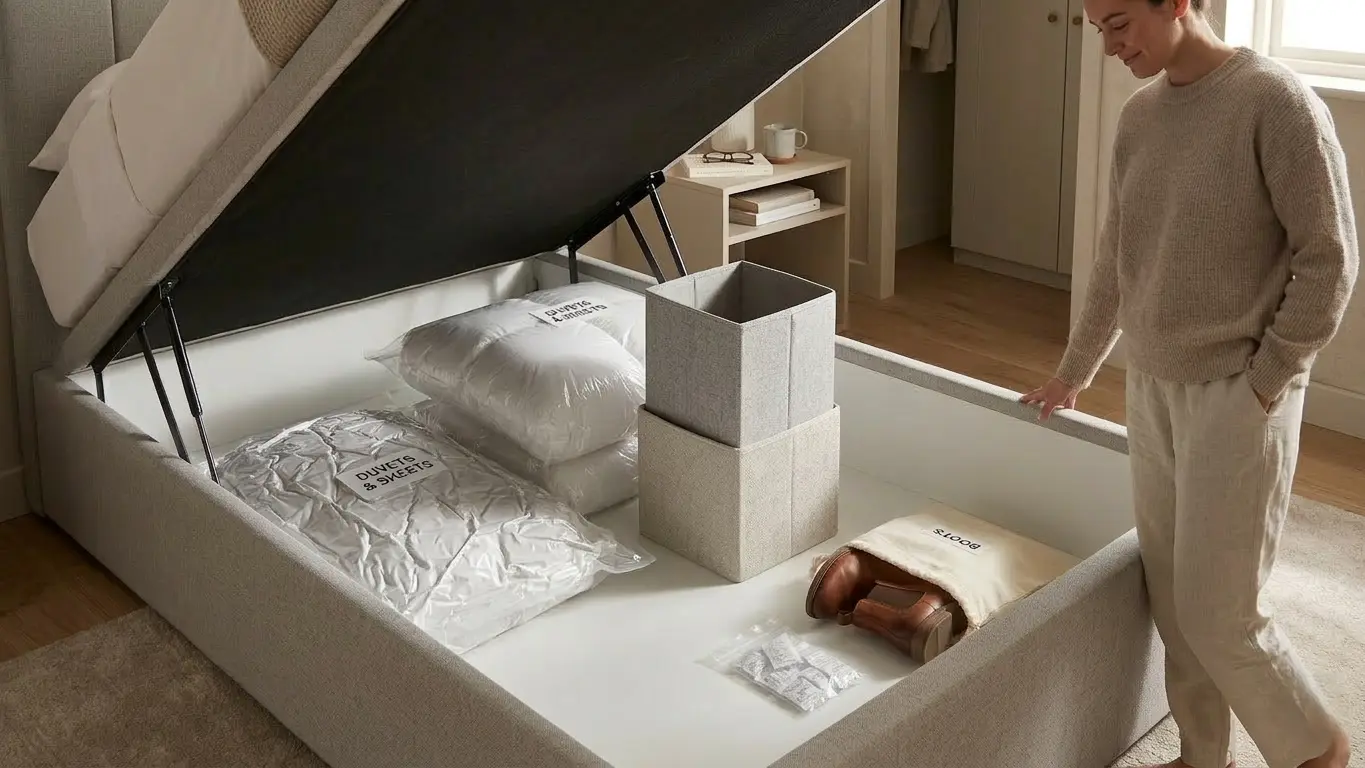
This is one of the most common questions people have before buying an ottoman bed, and it’s a fair one. The idea of lifting a mattress every time you need something from underneath sounds exhausting. And if that were actually what you had to do, it would be.
The good news is that’s not really how it works. But there are some honest caveats worth knowing about before you buy, because the answer isn’t a blanket yes or no. It depends on the quality of the bed, how often you’re opening it, and what you’re expecting from it.
What You’re Actually Lifting
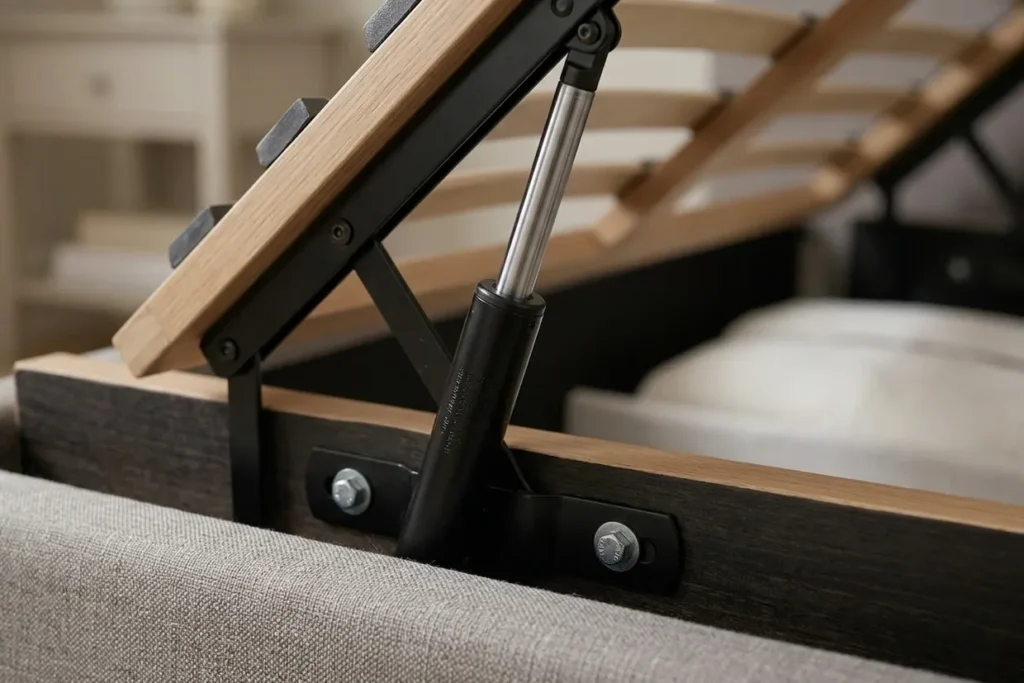
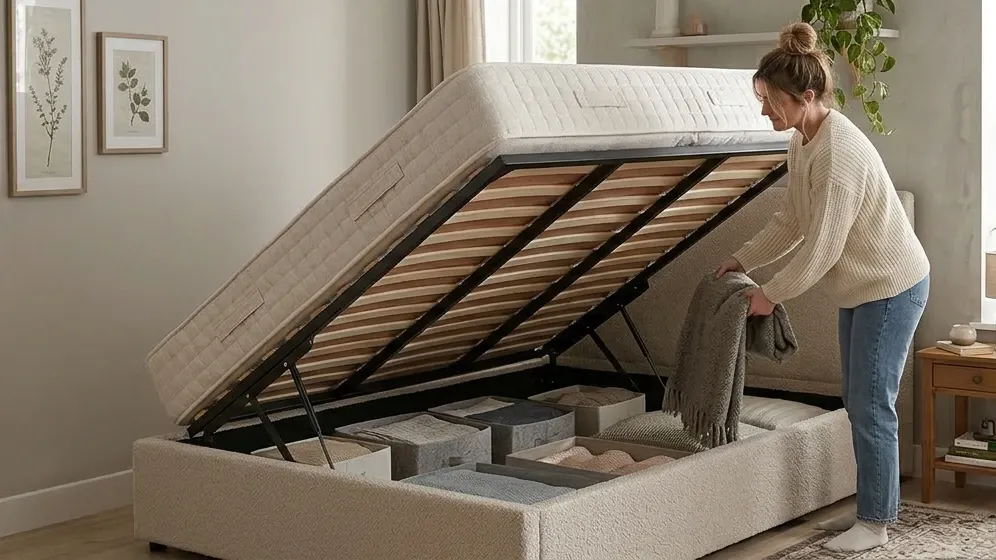
When you open an ottoman bed you’re not manually hauling a mattress into the air. The gas pistons do most of the work. You apply a small amount of upward force and the mechanism takes over, lifting the base smoothly and holding it open on its own while you access the storage.
On a well-made bed with properly rated pistons, the effort required is comparable to opening a heavy car boot. A firm push upward, a smooth rise, and then it stays there. You’re not holding anything up while you rummage around underneath.
Closing it is the same in reverse. You guide the base back down and it descends in a controlled way rather than dropping. No slamming, no strain, no drama.
When It Starts to Feel Like Hard Work
There are a few specific situations where opening an ottoman bed genuinely becomes more effort than it should be.
Cheap pistons that aren’t rated for the load
Budget ottoman beds often cut costs on the lift mechanism. If the pistons aren’t rated to handle the combined weight of your mattress and a loaded storage compartment, you’ll feel it. The base will be heavy to lift, won’t stay open confidently, and will start to feel even worse over time as the pistons lose tension.
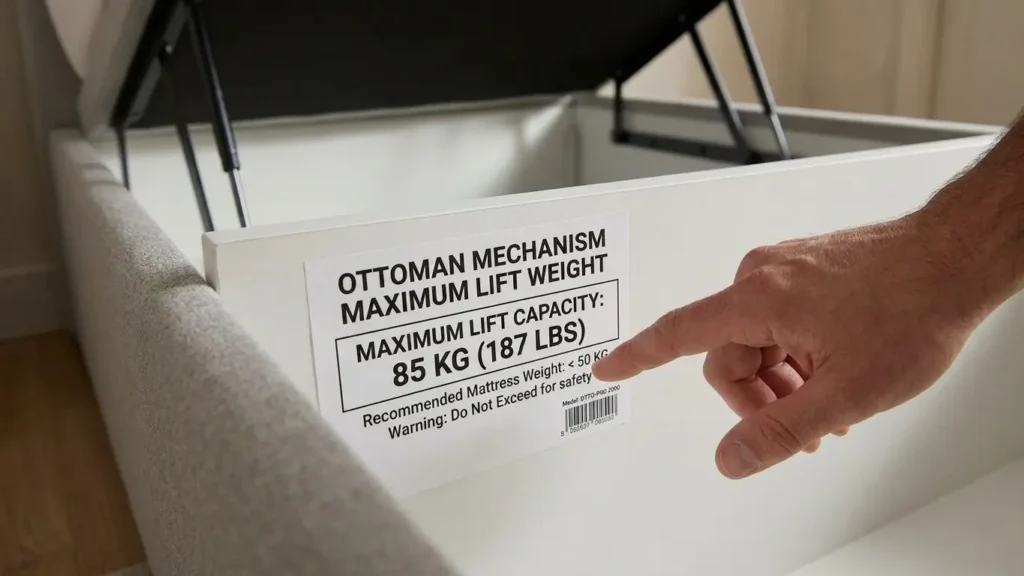
This is the single most common complaint about ottoman beds and it’s almost always a buying decision problem rather than a design flaw. A bed with properly rated gas pistons doesn’t have this issue. Always check the weight rating in the product specs before you buy. If it’s not listed, that tells you something.
A very heavy mattress on an underpowered lift
A thick hybrid or latex mattress can weigh 40 to 60kg on its own. Add that to the weight of the base platform and whatever you’re storing underneath, and you can quickly exceed what budget pistons are designed to handle.
If you’re buying a high-end mattress, spend accordingly on the bed too. The two need to work together. A 600 pound mattress on a 200 pound bed frame is a combination that will frustrate you within a few months.
Opening it too frequently
Ottoman beds are not designed to be opened multiple times a day. They work beautifully as occasional access storage, a few times a week at most for most people. If you’re planning to store your everyday wardrobe in there and dig through it every morning, you will find it annoying.
The fix for this is simple: just don’t store daily-use items in the ottoman compartment…that’s it. Keep those in a drawer, a wardrobe, or a bedside table. Use the ottoman for things you need once a week or less and it will feel effortless every single time.
Does the Lift Direction Make a Difference?
Yes, slightly. A foot end lift ottoman opens from the bottom of the bed, so you stand at the foot and push upward. The natural body position for this is fairly comfortable, similar to lifting a lid on a large chest.
A side lift ottoman opens from the left or right, which means you’re lifting from beside the bed and the base opens toward the ceiling on that side. Some people find this slightly more awkward depending on how much space they have to stand. That said, the gas pistons compensate for most of the physical effort regardless of direction, so the difference in practice is minor.
If you have a bad back or limited mobility, a foot end lift tends to feel more natural since you’re not leaning over a side rail to initiate the lift. Worth thinking about if that’s relevant to you.
What a Good Ottoman Bed Actually Feels Like to Use
On a quality bed with properly rated pistons, opening the storage feels almost satisfying. One firm lift, the base rises smoothly, stays open on its own, you get what you need, guide it back down and done. The whole thing takes maybe fifteen seconds.
After a few uses it becomes completely automatic. You stop thinking about it. It’s just how you access that storage, the same way you don’t think about pulling open a kitchen drawer.
The people who describe ottoman beds as hard to use are almost always describing a cheap bed with underpowered pistons, or a situation where they’re trying to use it as daily-access storage when it was never designed for that. Neither of those is a fundamental problem with the product itself.
What to Check Before You Buy
If ease of use matters to you, these are the things worth looking at in the product listing before committing:
- Piston weight rating: Should be listed in the specs. Look for a total system rating of at least 150kg for a double, more for a king. If it’s not listed, ask before buying.
- Number of pistons: Most doubles have two. King and super king sizes should have three or four for a balanced lift. More isn’t always better but underpowered for the size is always worse.
- Brand reputation: Cheap beds from unknown brands cut corners somewhere and the lift mechanism is usually where. A well-reviewed bed from a reputable brand will have pistons that last years, not months.
- Replacement parts availability: Gas pistons do eventually wear out, usually after many years on a good bed. Check that the manufacturer or retailer stocks replacement pistons. If they don’t, a single worn piston means replacing the whole bed.
A Few Specific Situations Worth Mentioning
If you have a bad back
A good gas lift ottoman bed puts very little strain on your back because the mechanism does the lifting. The motion is more of a push than a lift, and you’re not holding any weight. That said, if bending down to access a low compartment is uncomfortable for you, consider how much clearance you’ll have to stand next to the open base. A side lift with good standing room beside the bed tends to be more back-friendly than a foot end lift where you’re leaning in from the end.
If you live alone
No issue at all. The gas lift is designed for one person to operate. You don’t need someone to hold the base while you access the storage. A well-rated piston system holds the base fully open hands-free until you choose to close it.
If you have young children
Worth thinking about. The base is heavy and closes with meaningful force even with gas pistons slowing it down. Most ottoman beds don’t have a safety locking mechanism that keeps the base open if something gets in the way. Keep children away from the bed when the base is lifted and always supervise if they’re nearby. It’s common sense but it’s worth saying.
Things People Usually Ask About This
How long do gas pistons last on an ottoman bed?
On a quality bed used normally, 8 to 12 years is a reasonable expectation. Budget pistons on cheap beds can start to weaken after 2 to 3 years of regular use. When a piston starts to lose tension the base feels progressively heavier to lift, which is your cue to replace them rather than struggle on.
Can you replace the pistons yourself?
Usually yes, if the manufacturer supplies replacement parts. It typically involves removing a few fixings, sliding the old piston off its mounting points and clicking the new one in. Most people manage it without needing professional help. The tricky part is finding the right spec of piston for your specific bed, which is why buying from a brand that stocks spares matters.
Does the storage being full make it harder to lift?
The storage weight sits on the floor of the compartment, not on the base platform itself, so a full storage compartment doesn’t directly add to the lifting weight. What matters is the mattress weight and the base platform weight, both of which the pistons are rated against. That said, if you’re packing extremely heavy items like books or tools, the overall load on the frame increases and a budget bed will feel the strain faster.
Is a side lift or foot end lift easier to use?
Both are easy on a well-made bed. Foot end lift feels slightly more natural for most people since the body position is more upright. Side lift requires a bit more standing room beside the bed but gives you more flexibility on room layout. We cover this comparison in detail in our guide to gas lift vs side lift ottoman beds.
Should the Lifting Put You Off Buying One?
No, provided you buy a bed with a properly rated gas lift mechanism and use the storage for what it’s designed for. Occasional access to bulky or seasonal items, not a daily wardrobe you’re digging through every morning.
The lifting concern is one of those things that sounds more significant before you’ve used one than it actually is in practice. Most people who own a decent ottoman bed stop thinking about it after the first week. It just becomes part of how the bedroom works.
If you’re ready to look at specific models that have solid lift mechanisms across different budgets, our guide to the best ottoman beds for small apartments covers the top options with lift quality factored into every recommendation. According to sleep researchers, a well-organised, clutter-free bedroom has a measurable effect on how quickly you fall asleep and how rested you feel in the morning, which makes the investment in a proper storage solution worth thinking about seriously.