
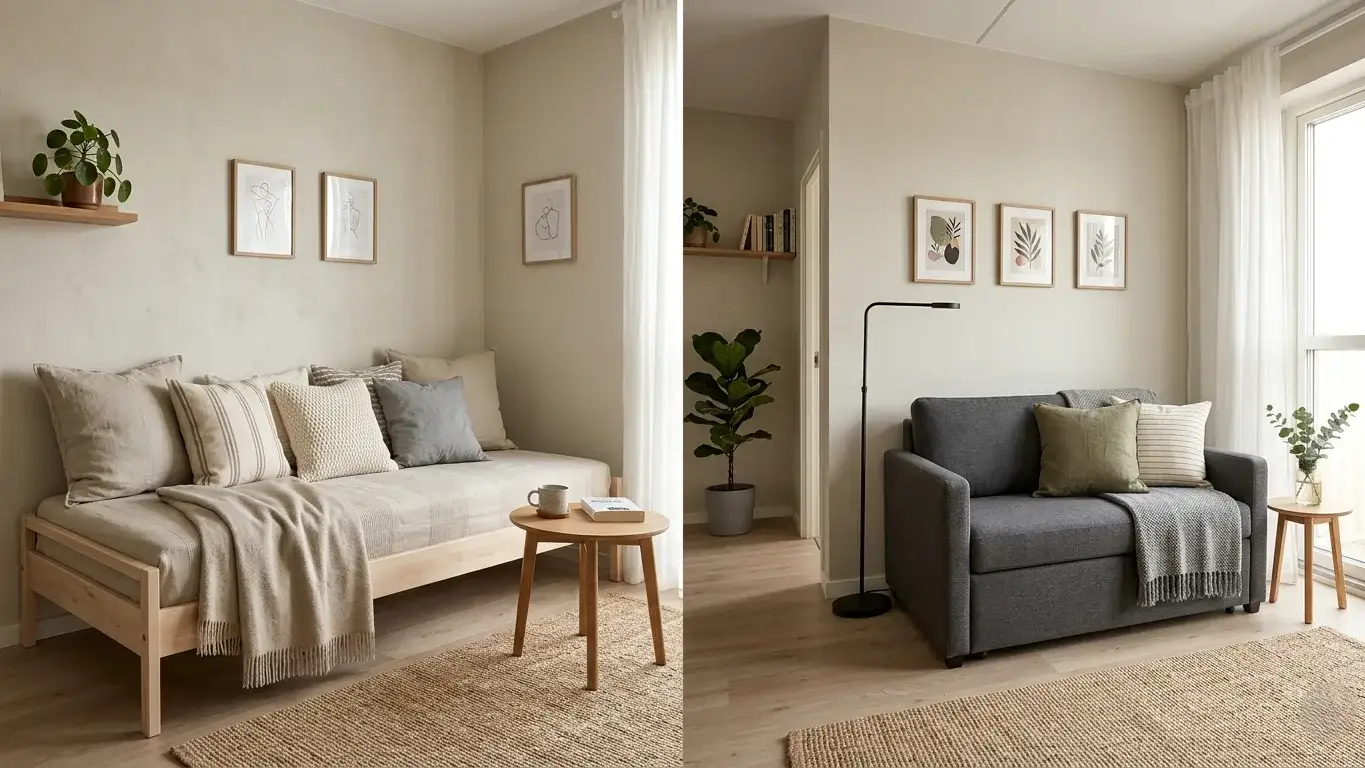
If you’re furnishing a small apartment and you need something that works as a sofa during the day and a bed at night, a daybed or a sofa bed are the two options that come up most often. They look like they’re solving the same problem. In practice they solve it in quite different ways, and one of them will suit your situation considerably better than the other.
Here’s the honest comparison.
What each one actually is
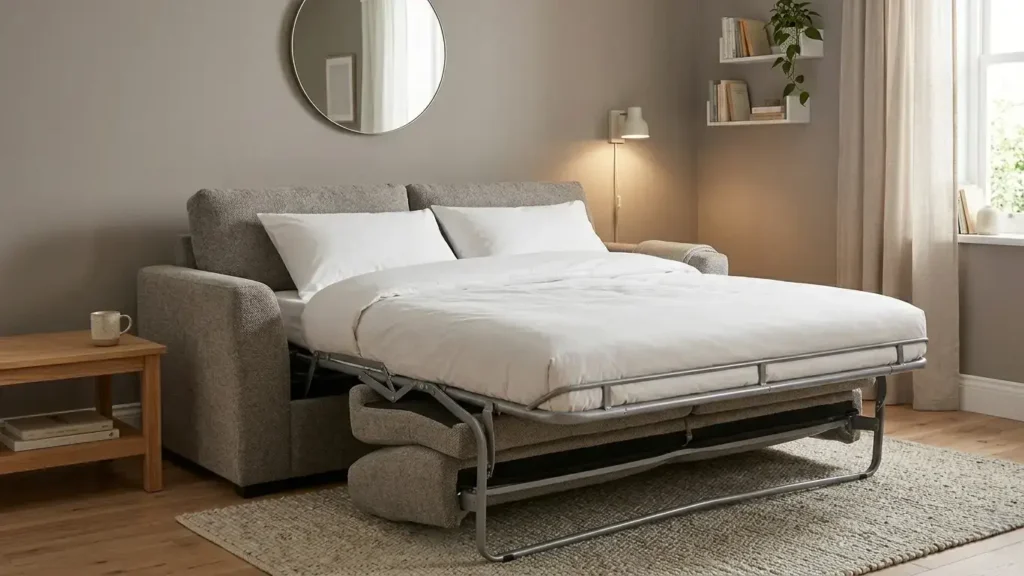
A sofa bed is a sofa first. It looks like a standard sofa, functions as a sofa for sitting, and converts into a sleeping surface when needed, either by pulling out a hidden mattress from beneath the cushions, folding down the backrest, or reclining the whole frame. The conversion takes a minute or two. The sleeping surface is secondary to the sofa function.
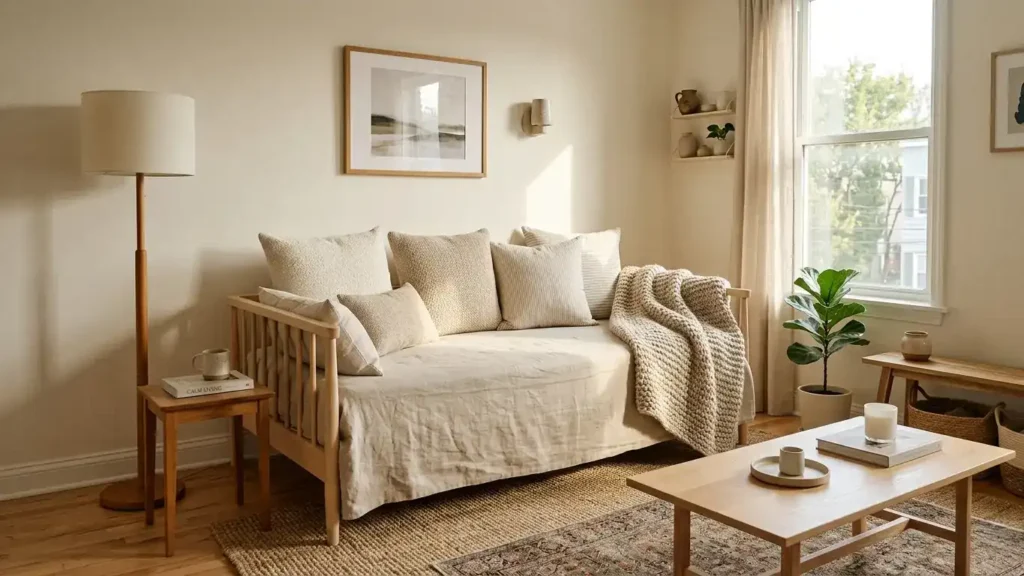
A daybed is a bed first. It has a permanent mattress on a raised frame with a back panel and usually two side arms. During the day, styled with cushions, it reads as seating. At night, cushions off, it’s a proper bed with a proper mattress. There’s no mechanism, no conversion process, nothing to pull out or fold down.
That difference in approach is what drives almost every other comparison between the two.
Sleeping comfort
On sleeping comfort, a daybed wins for most people at most price points. The mattress is a standard twin mattress sitting on a solid frame, the same as any other bed. You choose the mattress thickness and firmness independently of the frame. If you want a good mattress, you buy a good mattress.
A sofa bed’s sleeping surface is determined by the product you buy. Budget and mid-range sofa beds use thin fold-out mattresses or foam that compresses over time. The mechanism that makes the sofa convert also determines the mattress depth, which is typically shallower than a dedicated bed mattress. For occasional guest use this is usually fine. For nightly sleeping it starts to feel like a compromise within a few weeks.
If the sleeping surface is going to be used regularly, whether by you or by a frequent guest, a daybed with a proper mattress is the more comfortable long-term choice. If the sleeping use is genuinely occasional, a decent quality sofa bed handles it well enough.
Sofa function
On sofa function, a sofa bed wins. It’s designed to be a sofa. The seating depth, the cushion thickness, and the overall proportions are built around sitting comfortably rather than sleeping comfortably. A good sofa bed looks like proper living room furniture and functions like it too.
A daybed styled with cushions reads as sofa-adjacent. The seating depth is narrower than a standard sofa, the back panel is lower, and the overall proportions say bed more than sofa to most people once they sit in it. It works well enough as a place to sit, read, or lounge, but it doesn’t replace a full sofa in a room where sitting is the primary function.
If the living area is the main space in your apartment and the sofa function matters as much as the sleeping function, a sofa bed is the better fit. If you’re furnishing a studio bedroom or a guest room where sleeping is the primary use and sitting is secondary, the daybed’s stronger sleeping surface tips the balance.
Floor space
Both options use roughly the same floor space in sofa mode since they’re both sized around a twin or similar sleeping surface. The difference shows up when the sleeping surface is in use.
A daybed takes up exactly the same floor space whether it’s being used as a sofa or a bed. Nothing extends, nothing unfolds. The footprint is fixed.
A sofa bed needs additional floor space in front of it when the bed is extended. The pull-out mattress or fold-down frame extends outward, sometimes by two feet or more, which means the room needs clear space in front of the sofa for the bed to function. In a very small apartment this is often the deciding factor. If the room doesn’t have that clearance in front of the sofa position, a pull-out sofa bed physically can’t be used as a bed without rearranging the room first.
A daybed avoids this entirely. It sits against the wall and the sleeping surface is exactly where it is during the day. No clearance needed, no rearranging required.
Practicality for daily use
This is where the daybed has a consistent advantage for anyone using it as their primary sleeping surface. There’s no setup and no pack-down. You sleep in it, you get up, you put the cushions back. Done. A sofa bed requires pulling out the mattress, making it up, sleeping in it, packing it away in the morning, and replacing the cushions. For a guest who stays one night that’s fine. For daily use it gets old quickly.
If the bed is going to be slept in every night, the daybed’s simplicity is a meaningful quality of life advantage over a sofa bed at the same price.
Style and room feel
A sofa bed tends to look more like living room furniture, which matters in a studio where the living area and sleeping area share the same space. A daybed looks more like bedroom furniture, which is fine in a guest room or a dedicated bedroom space but can make a studio feel more like a bedroom than a living room during the day.
This is partly a styling question. A daybed with well-chosen cushions, a good throw, and positioned thoughtfully against a wall can read as intentional living room furniture. But it takes more effort to achieve than a sofa bed, which looks like a sofa by design.
| Daybed | Sofa bed | |
| Sleeping comfort | Better, proper mattress on solid frame | Varies, thinner mattress on most budget options |
| Sofa function | Sofa-adjacent, narrower seating depth | Designed as a sofa, feels like one |
| Floor space when in use as bed | Fixed footprint, no extension needed | Extends outward, needs clearance in front |
| Daily use simplicity | No setup or pack-down | Requires converting back and forth |
| Best for | Regular sleeping, guest rooms, studios | Living rooms, occasional guest use |
| Price for equivalent quality | Lower | Higher for same sleeping comfort |
Which one should you actually choose?
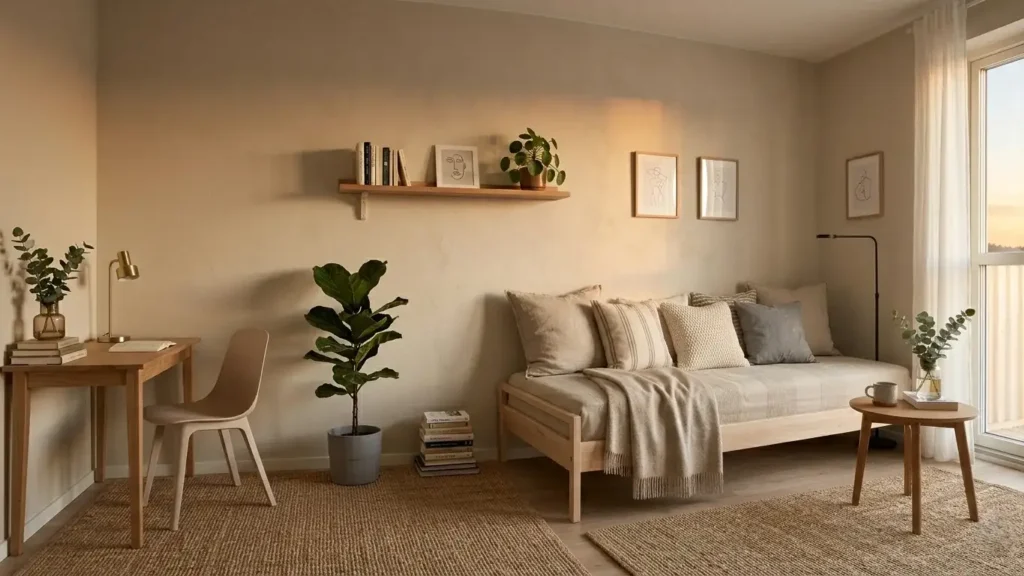
Choose a daybed if: the sleeping surface is going to be used regularly, the room is a guest room or studio bedroom rather than a primary living space, or the apartment doesn’t have clearance in front of the sofa position for a pull-out to extend.
Choose a sofa bed if: the room is primarily a living space where the sofa function matters more than the sleeping function, guests stay occasionally rather than regularly, and the room has enough floor space for the pull-out to extend comfortably.
There’s also a middle ground worth knowing about. Some daybed frames, particularly those with a pop-up trundle underneath, can function as a larger sleeping surface when needed while still reading as a day bed with a sofa-like profile during the day. If sleeping two people occasionally is the requirement, a daybed with a pop-up trundle solves that without needing a sectional sofa bed.
If a sofa bed is actually what you need, our guide to the best sofa beds for small apartments covers the top options across different budgets and styles with the key specs laid out clearly.
And if a daybed is the direction, our guide to the best daybeds for small spaces covers the top picks with honest assessments of how well each one functions in both sofa and sleeping modes.
If you want to read more on how people make small apartments work as both living and sleeping spaces without one function compromising the other, this Apartment Therapy piece on studio apartment furniture layout covers some of the most practical approaches interior designers actually use.