
They look similar from a distance. Both are raised off the ground, both have a ladder or staircase, and both show up in the same search results when you’re trying to figure out how to fit more into a smaller space. But a loft bed and a bunk bed are designed to solve completely different problems, and confusing the two leads to buying the wrong thing.
Here’s a clear breakdown of what each one actually is, how they differ in practice, and how to figure out which one you actually need.
The core difference
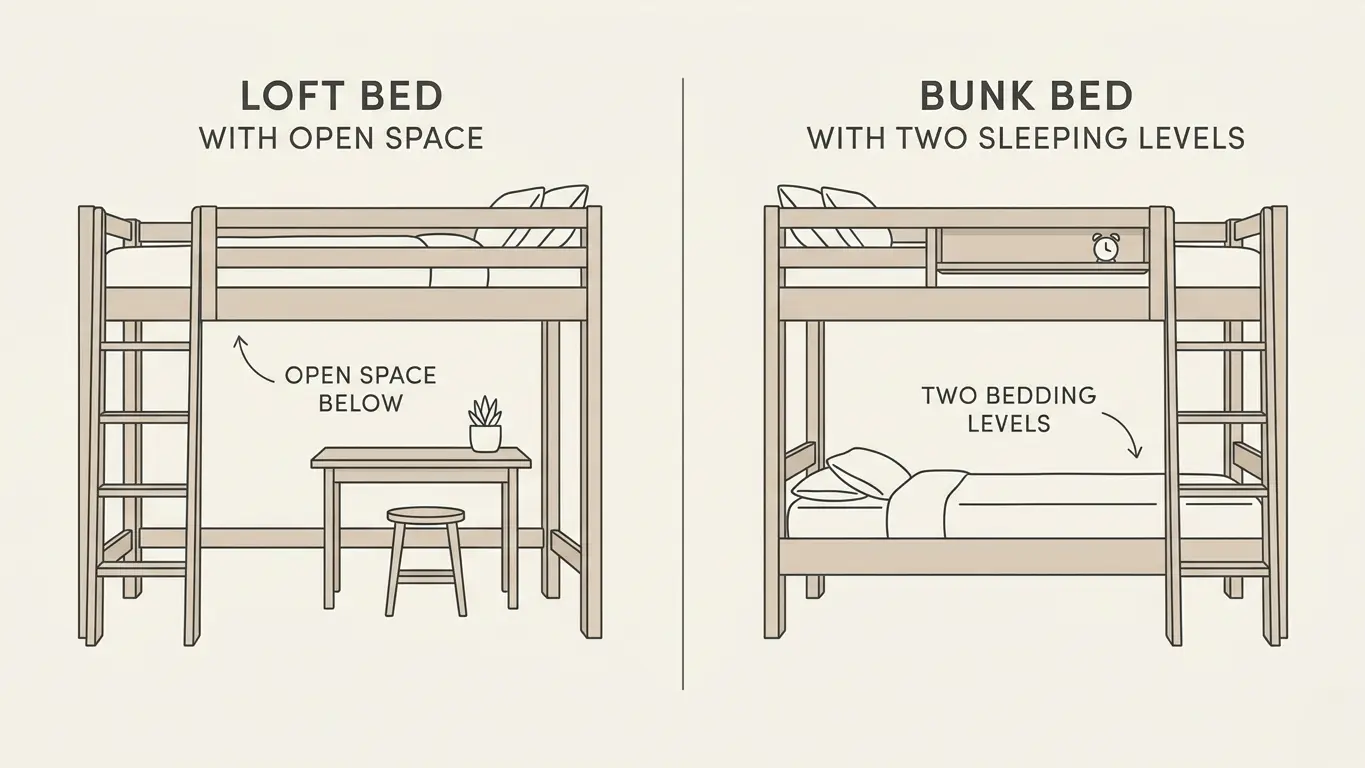
A bunk bed has two sleeping levels stacked on top of each other. The whole point is to sleep two people in the floor space that would normally fit one. The lower bunk is a bed. The upper bunk is a bed. The space between them is just enough to sit up without hitting your head.
A loft bed has one sleeping level, raised high, with the space below left completely open. There’s no lower bunk. That floor space is yours to do with as you like. A desk, a wardrobe, a small sofa, open floor space that makes the room feel less like you’re sleeping in a cupboard. The bed is still a bed, it just earns more of its keep.
That’s the whole distinction. Bunk bed: two sleepers, no usable space below. Loft bed: one sleeper, full usable space below.
How they’re built differently
The structural difference follows from the purpose. A bunk bed needs to support weight at two levels, which means the lower bunk posts have to carry the upper bunk frame plus the weight of whoever is sleeping up top. Most bunk beds have four corner posts that run the full height, with the lower sleeping surface somewhere around 18 to 24 inches off the ground and the upper bunk at around 55 to 65 inches.
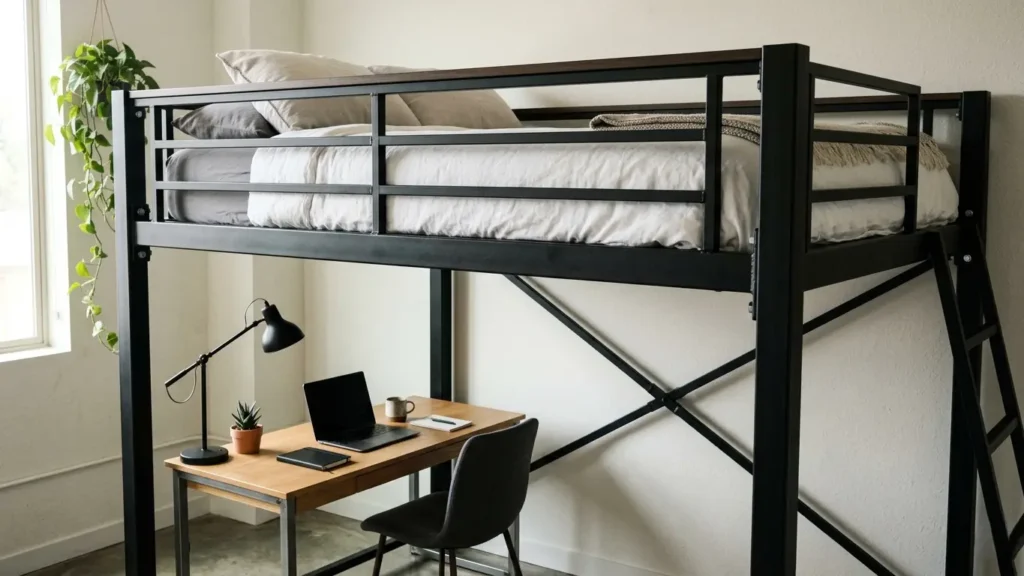
A loft bed only has one sleeping level, but it sits higher than a standard bunk bed upper because there’s no lower bunk to work around. The sleeping platform typically sits at 55 to 65 inches off the ground, leaving 40 to 55 inches of clear height underneath depending on the specific model. That clearance is what makes a proper desk setup or standing wardrobe possible underneath.
The guardrail situation is also different. On a bunk bed, the upper bunk has guardrails on the sides to stop someone rolling out in their sleep. A loft bed has the same, but because it’s the only sleeping level and sits higher, the guardrail design tends to be more substantial on quality adult-rated frames.
Who each one is actually for
Bunk beds
Bunk beds make sense when you need to sleep two people in a room that doesn’t have space for two separate beds. That’s the primary use case and it’s a good one. Kids sharing a bedroom, a guest room that needs to sleep two without dominating the room, a holiday home where sleeping capacity matters more than workspace.
Adults do use bunk beds, particularly in shared housing, student accommodation, and anywhere sleeping capacity is the constraint rather than personal space. But for one person in their own bedroom who wants to make better use of their room, a bunk bed doesn’t solve anything. It just adds a sleeping surface you don’t need and takes away floor space you could be using.
Loft beds
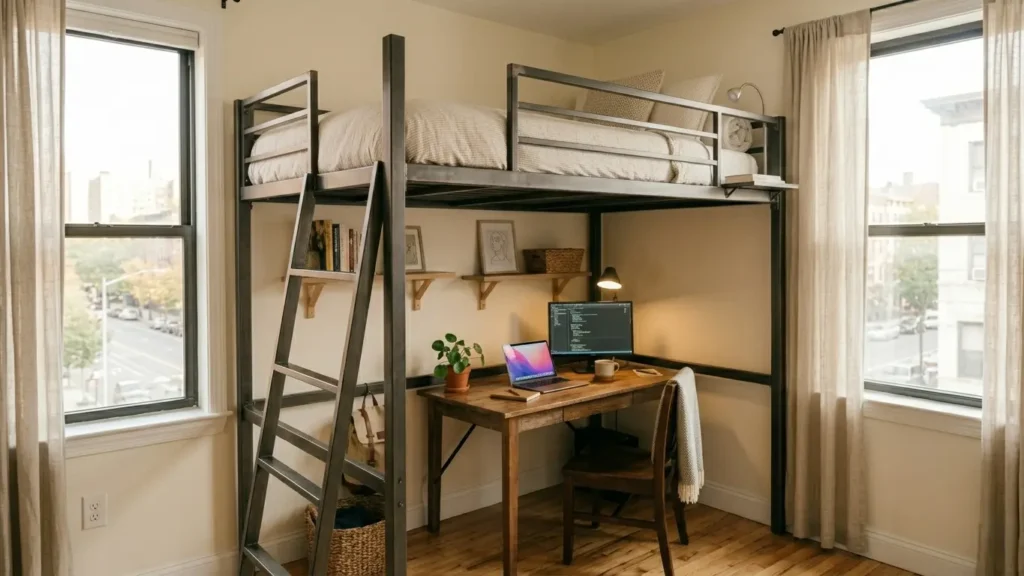
Loft beds make sense when one person wants to sleep in a room that also needs to function as something else. A home office, a living space, a study, a creative workspace. The sleeping level goes up and the floor below becomes available for whatever that second function is.
This applies whether you’re in a studio apartment, a small bedroom, a spare room that needs to double as a home office, or simply someone who’d rather have more usable floor space and less furniture taking it up. The size of the space matters less than the intention behind it. A loft bed is a deliberate choice about how you want to use your room, not just a response to having nowhere else to put a bed.
Loft bed vs bunk bed at a glance
| Loft bed | Bunk bed | |
| Sleeping levels | One | Two |
| Who it’s for | One person who wants usable space below | Two people sharing the same room |
| Space underneath | Open, yours to use as you choose | Taken up by the lower bunk |
| Best use of the space below | Desk, wardrobe, seating, open floor | Sleeping |
| Typical height | 60 to 75 inches | 60 to 70 inches |
| Weight capacity | Varies, check spec carefully for adults | Varies, lower bunk often rated higher |
| Ladder or stairs | Both options exist | Almost always a ladder |
| Best for | Solo living, home offices, compact bedrooms | Kids’ rooms, shared bedrooms, guest rooms |
The questions worth asking before you decide
How many people need to sleep in the room?
If the answer is two, a bunk bed is probably what you need, unless those two people are a couple, in which case a standard double or a loft bed with a larger mattress makes more sense than stacking them on top of each other.
If the answer is one, a loft bed almost always serves you better unless the room is large enough that you don’t need to reclaim the floor space at all.
What do you want to do with the space underneath?
This is the more useful question. If you have a clear answer, a specific desk setup, a wardrobe you need, a seating area, a reading corner, a loft bed gives you the frame to build that. If you don’t have a clear answer and you’re just thinking about freeing up floor space in a general sense, it’s worth working that out before you buy. The best loft bed for a home office setup looks different from the best one for a minimal open floor plan.
We cover the different ways to use the space underneath in our article on loft bed ideas, which is worth reading before committing to a specific configuration.
Are you buying for a child or an adult?
This matters more than it might seem. Many bunk beds and some loft beds are designed with children in mind, and their weight capacities reflect that. An upper bunk rated to 175 or 200 pounds is fine for a child and a problem for most adults. If you’re buying a loft bed as an adult, checking the weight capacity carefully before purchasing is not optional. We go into this properly in our article on whether loft beds are safe for adults.
Can a bunk bed be used as a loft bed?
Sometimes yes. Some bunk beds are designed so the lower bunk can be removed or detached, converting the frame into a loft configuration. If this is something you want, check the product listing specifically for this feature before buying. Not all bunk beds support it, and trying to remove a lower bunk that wasn’t designed to be removed is a structural risk you don’t want to take.
Some manufacturers sell the same frame in both bunk and loft configurations, which is worth knowing if you want the flexibility to change the setup later. The reverse conversion, turning a loft bed into a bunk bed, is less common since loft bed frames often don’t have the lower connection points that a bunk configuration requires.
A few things that often get overlooked
Ceiling height is the practical constraint most people forget to check. A loft bed puts you higher than a standard bed, and if your ceiling isn’t high enough, you end up not being able to sit up properly on the sleeping platform. The same applies to the upper bunk on a bunk bed, though the lower ceiling clearance is typically less of an issue since you’re not going to be doing much sitting on a bunk bed upper anyway.
Mattress thickness matters more on a loft bed than on a bunk bed. A thicker mattress on a loft bed reduces your clearance between the mattress surface and the ceiling, and also reduces the guardrail height relative to the sleeping surface. Most loft bed manufacturers specify a recommended mattress thickness range in the product details. It’s worth reading that before buying your mattress separately.
Assembly on both types is involved. Neither is a quick solo job. Two people and a clear couple of hours is the realistic expectation for most flat-pack versions of either type. The frames are heavy, the component count is high, and the structural connections need to be done properly for obvious safety reasons.
The choice between a loft bed and a bunk bed is really a question of what you’re trying to solve. Two people sharing a room, the bunk bed is the answer. One person who wants their bedroom to do more than just hold a bed, the loft bed is the answer. Everything else, the height, the style, the configuration, follows from getting that first decision right.
If you’ve landed on a loft bed and you’re now thinking about how to set up the space underneath well, our article on loft bed ideas covers the different configurations worth considering, from full desk setups to wardrobe arrangements to open floor layouts, and how to decide which one suits the way you actually live.
Research and writing on how people use and adapt their living spaces consistently shows that intentional furniture choices, ones made around how you actually live rather than convention, have a bigger impact on daily comfort than the size of the space itself.