
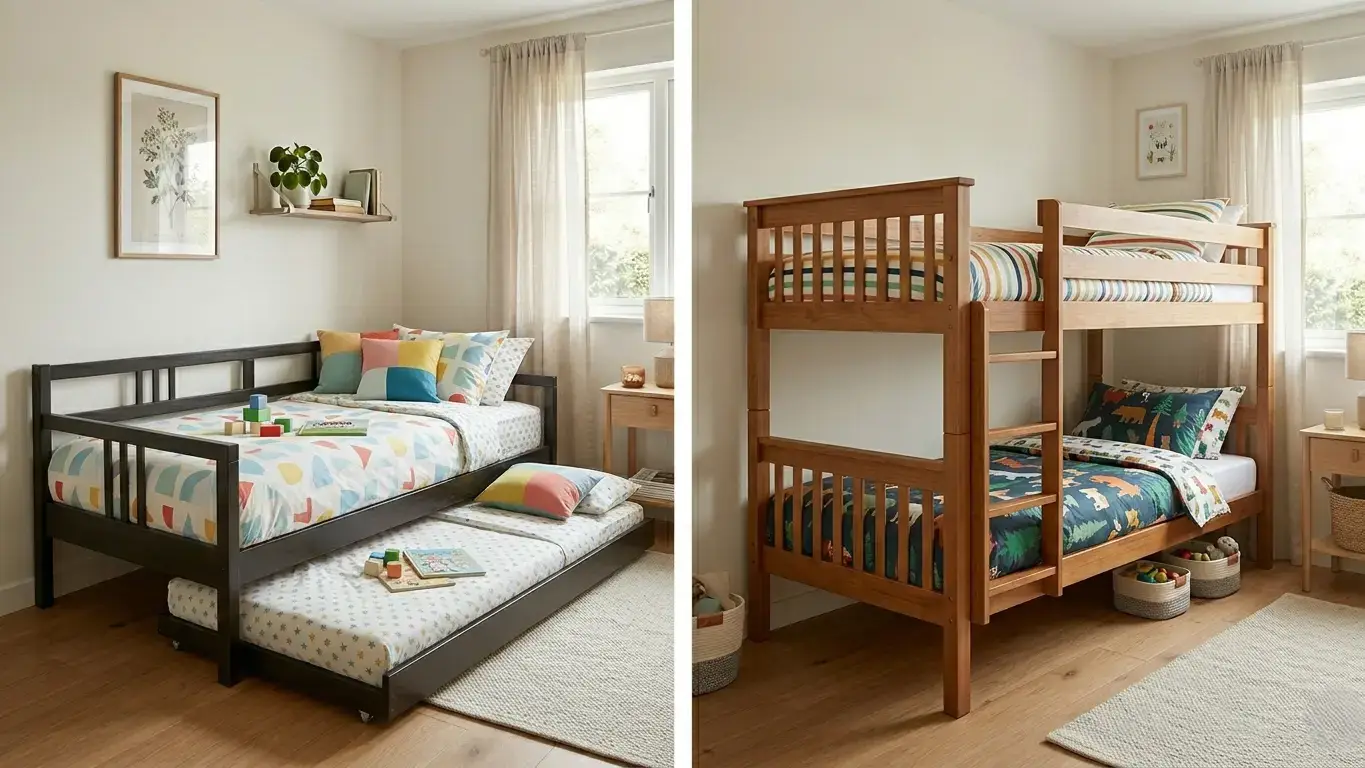
Both a trundle bed and a bunk bed solve the same problem: sleeping two children without needing two separate bedrooms or two full-size bed footprints. But they solve it in completely different ways, and the right choice depends on how the room is actually used day to day.
This isn’t a close call once you understand what each one is actually designed for. Here’s the straightforward comparison.
The core difference
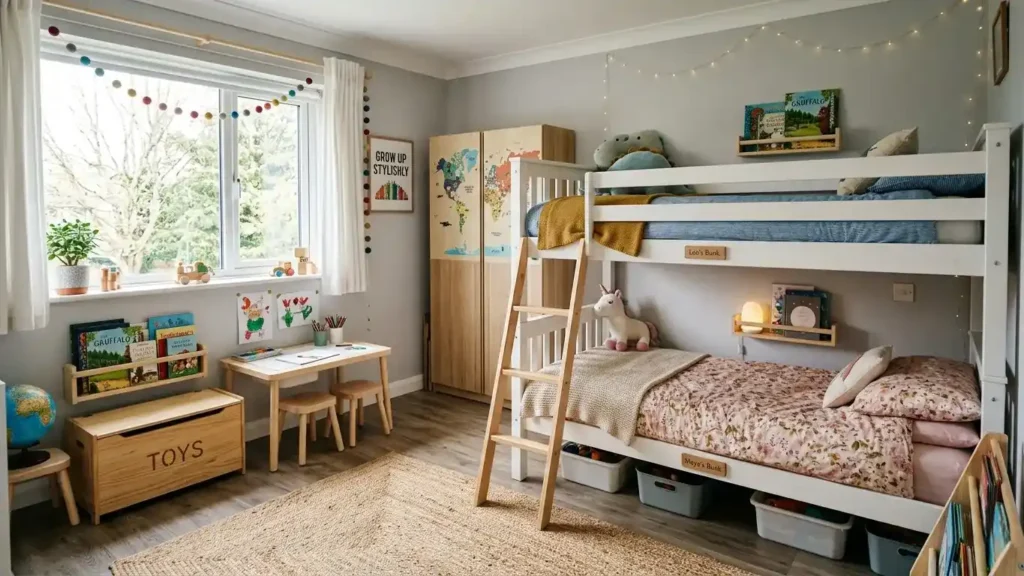
A bunk bed stacks two sleeping surfaces vertically. Both beds are always set up and ready to use. The children sharing the room each have their own permanent bed, one on top and one below, and the room is essentially a shared bedroom.
A trundle bed keeps one sleeping surface visible and stores a second one underneath. The trundle pulls out when needed and tucks away when it isn’t. The room functions as a single child’s bedroom most of the time, with the option to sleep a second person when the situation calls for it.
That distinction is the whole decision. If two children live in the room and sleep there every night, a bunk bed is almost certainly the right answer. If one child lives in the room and occasionally has a friend stay over, a trundle is the more practical and less space-consuming choice.
When a bunk bed makes more sense
Two children sharing a room permanently
This is the bunk bed’s primary use case and it’s a strong one. Two children who sleep in the same room every night each need their own permanent sleeping surface. A bunk bed gives them that in the floor space that one standard bed would occupy. The vertical stacking is what makes it work in a small room.
A trundle in this scenario is a less comfortable long-term solution. The lower trundle mattress sits at floor level, which is fine for a night or two but not ideal as a permanent sleeping arrangement for a child who sleeps there every night.
You want to maximise floor space during the day
A bunk bed keeps both sleeping surfaces off the floor permanently. During the day the room has its full floor space available for playing, homework, or whatever else the children do in there. Nothing needs to be pulled out or put away.
A trundle, when pulled out, takes up a significant portion of the floor. If two children are sleeping in the room every night and the trundle is always out, you’ve lost that floor space permanently anyway without the structural advantage of a bunk bed.
The children prefer their own defined space
Some children, particularly older ones, value having a clearly defined sleeping area of their own. A bunk bed gives each child their own level with their own bedding, their own reading light, and their own sense of territory within the shared room. A trundle doesn’t offer that same separation.
When a trundle makes more sense
One child with occasional sleepovers
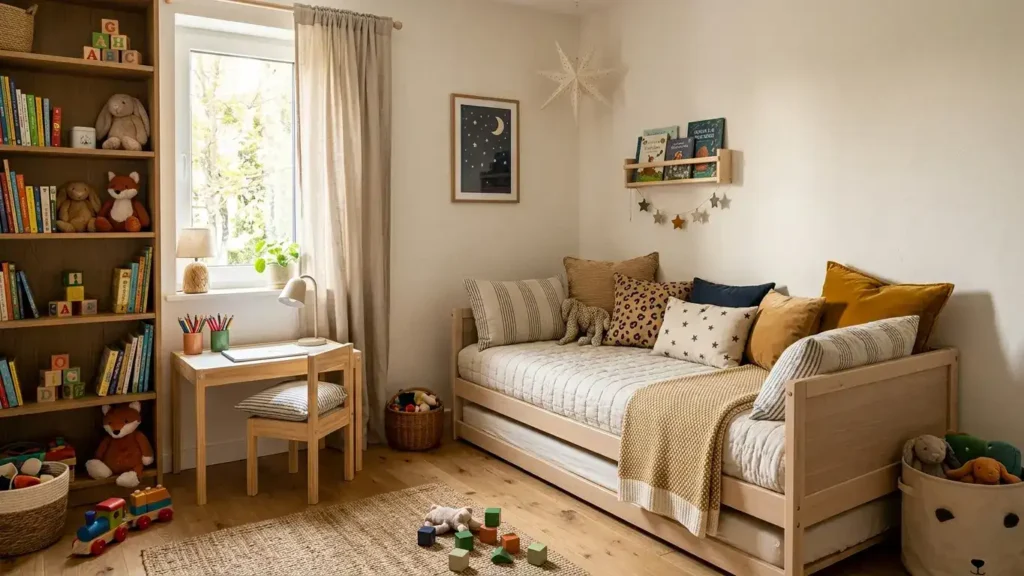
The trundle is purpose-built for this situation. One child lives in the room, sleeps in the main bed every night, and the trundle stays hidden underneath until a friend comes to stay. The room functions as a normal single bedroom most of the time. When a guest arrives, the trundle pulls out in under a minute and you have two proper sleeping surfaces without rearranging anything else.
This is the most common use case for a daybed with trundle in a child’s room, and it works well. The floor space stays clear during the week when it isn’t needed, and the sleepover situation is handled without an air mattress or a sleeping bag on the floor.
The room is too small for a bunk bed
Bunk beds have a minimum ceiling height requirement. The child sleeping on the top bunk needs enough clearance to sit up without hitting the ceiling, and enough guardrail height to sleep safely. In a room with lower ceilings or in an older house where ceiling heights are tighter, a bunk bed may simply not be a safe or practical fit.
A daybed with trundle has no ceiling height requirement. It sits at standard bed height and the trundle stays at floor level. For a room where the ceiling rules out a bunk bed, a trundle is often the most practical alternative that still gives you a second sleeping surface when needed.
You want the room to function as more than just a bedroom
A daybed with trundle, styled with cushions against the wall, looks like a sofa or a reading seat during the day. The room can function as a play space, a homework room, or a chill-out area without the permanent presence of two beds dominating the space. A bunk bed is always clearly a sleeping area, which limits how the room reads during waking hours.
For older children or teenagers who use their room for more than sleeping, a daybed with trundle gives the room more flexibility. The sleeping function is there when needed and less visible when it isn’t.
What about safety?
Safety comes up in both categories and it’s worth addressing plainly.
Bunk beds have a minimum recommended age for the top bunk. Most manufacturers and paediatric guidance suggests children under six should not sleep on the top bunk due to the fall risk. The guardrails on the upper bunk are a safety requirement, not an optional feature, and the ladder design matters more than people tend to give it credit for. A sturdy ladder with wide rungs is considerably safer than a narrow vertical one for a child navigating it half-asleep.
Trundle beds sit much closer to the ground, which makes them inherently lower risk for falls. The main safety consideration with a trundle is making sure the mechanism is sturdy and the wheels lock properly when the trundle is in use. A trundle that shifts or rolls during the night is a practical annoyance at best and a hazard at worst.
Neither option is inherently unsafe when the product is well made and used as intended. The age and confidence of the child, the ceiling height of the room, and the quality of the frame are all more important than the product type.
| Bunk bed | Trundle bed | |
| Best for | Two children sharing permanently | One child with occasional guests |
| Sleeping surfaces | Two permanent | One permanent, one stored |
| Floor space during day | Maximised | Clear unless trundle is out |
| Ceiling height needed | Yes, minimum clearance required | No requirement |
| Room flexibility | Clearly a shared bedroom | Can function as play or study room |
| Top bunk age guidance | Not recommended under age 6 | Not applicable |
| Guest use | Second bed always visible | Second bed hidden when not needed |
The question that settles it
Is this room for two children who both sleep here every night, or is it one child’s room that occasionally needs to sleep a second person?
If it’s the first, get the bunk bed. If it’s the second, get the trundle. The answer to that question makes everything else straightforward.
One thing worth noting is that a bunk bed and a loft bed are related but different products. A loft bed has a raised sleeping platform with open space underneath for a desk or storage, rather than a second sleeping level. If the room is for one child and the goal is reclaiming floor space rather than sleeping two people, it’s worth reading up on what a loft bed is and how it differs from a bunk bed before you decide.
If you’ve landed on a trundle as the right direction and want to look at specific options, our guide to the best daybeds with trundle for small rooms covers the top picks with the key specs laid out clearly.
If you want some practical perspective on how shared bedroom setups actually work for kids day to day, this Today’s Parent piece on siblings sharing a bedroom is worth a read before you make the final call.