
Most people have a rough idea of what a daybed is but couldn’t tell you exactly how it’s different from a regular bed, a sofa bed, or a futon. The name doesn’t help much either. It sounds like something you’d find in a Victorian drawing room, which isn’t exactly what today’s versions look like.
The honest answer is that a daybed is one of the more practical furniture options available for small spaces, guest rooms, and studios, if you understand what it actually does and who it’s genuinely suited to. Here’s a clear breakdown.
What a daybed actually is
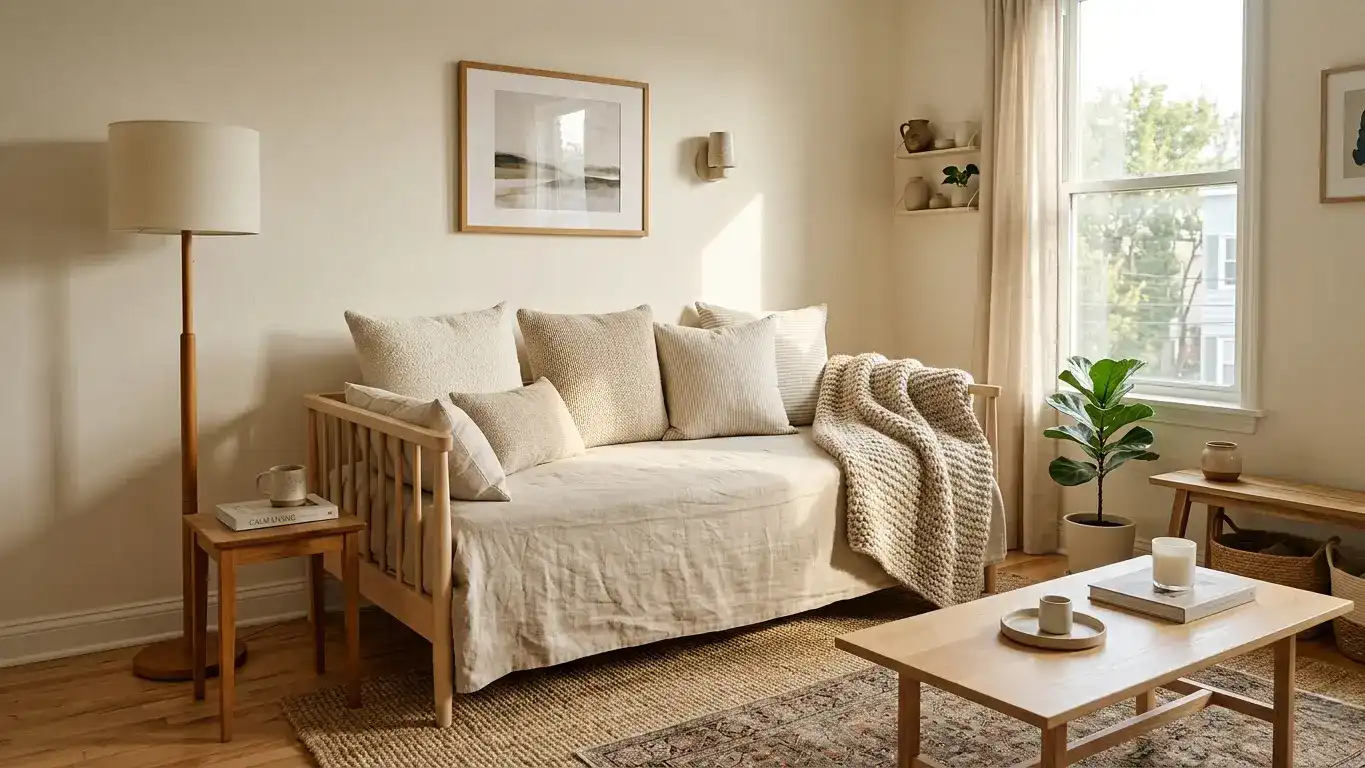
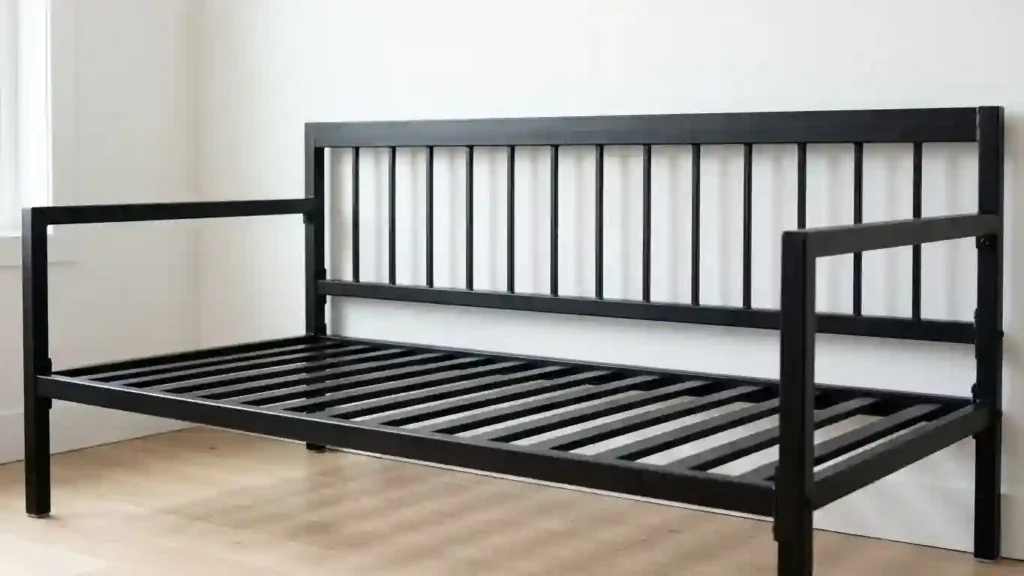
A daybed is a bed frame designed to function as both a sofa and a sleeping surface. The frame typically has a back panel and two side arms, or sometimes just a back and one arm, so it reads as seating when you’re in the room during the day. You push it against a wall, add cushions or bolsters, and it looks like intentional furniture rather than a bed that doesn’t have anywhere better to go.
Underneath the sitting surface is a standard mattress, usually twin size. When someone needs to sleep in it, the cushions come off and it functions like a normal single bed. No mechanism to pull out, no folding, no conversion process. It’s a bed that also looks like a sofa, which is a simpler and more practical solution than it might sound.
The frame height tends to be lower than a standard bed, which helps it look more like seating from across the room. Most daybed frames sit at around 14 to 18 inches from the floor to the sleeping platform, similar to a low sofa.
How it’s different from a sofa bed or futon
This is where people get confused, and it’s worth clearing up because the three products solve different problems.
A sofa bed looks like a sofa and converts into a bed by pulling out a hidden mattress from underneath the cushions. The sofa function is the primary mode and the bed is the secondary one. The conversion takes a minute or two and the sleeping surface is usually less comfortable than a dedicated bed.
A futon has a backrest that folds down flat. The mattress is part of the frame and the whole thing reclines. It’s generally cheaper than either a daybed or a sofa bed but tends to feel less comfortable in both sofa and sleeping modes.
If you’re specifically trying to work out the difference between a daybed and a pull-out couch, those two get confused more than any other pairing in this category, and that comparison deserves its own answer.
A daybed is different from both. It doesn’t convert at all. The mattress sits in the frame permanently. The back panel and arms make it look like seating, but it’s really a bed that’s designed to also function as a comfortable place to sit. The sleeping surface is a proper mattress on a proper frame, which is why daybeds tend to be more comfortable for regular overnight sleeping than sofa beds at a similar price.
If comfortable regular sleeping is the priority and the sofa function is secondary, a daybed is usually the better choice. If you need the furniture to primarily function as a full-sized sofa and only occasionally as a bed, a sofa bed makes more sense.
The different types worth knowing about
Standard daybed
Just the raised frame with a back panel and arms. You supply the mattress and whatever cushions or bolsters you want to make it look like seating. This gives you the most flexibility on mattress choice and styling. Most of the metal and wood daybed frames you’ll find on Amazon are this type.
Daybed with trundle
A trundle is a second bed frame on wheels that slides out from underneath the daybed when needed. During the day it’s hidden. At night it pulls out and gives you a second sleeping surface at floor level. This is the version that makes sense when you need to occasionally sleep two people in a room that normally only needs one bed. Whether a daybed with trundle is actually worth it depends on a few things worth thinking through before you buy.
Corner daybed
A corner daybed is designed to sit in the corner of a room with panels on two sides rather than one back and one arm. It uses the corner of the room, the most underused space in any small apartment, and leaves the center of the room open. For a studio where floor space in the middle matters, it’s a genuinely smart layout choice.
Wood vs metal
Wood daybed frames, typically pine or rubberwood, feel more substantial and suit rooms where the furniture is meant to look intentional. They tend to be quieter, hold up well over years, and suit a warmer or more traditional aesthetic. Metal frames are lighter, often cheaper, and come with more built-in features like charging stations and LED lighting. The right one depends on the room and who’s using it.
Who a daybed actually works well for
A daybed makes the most sense in a few specific situations.
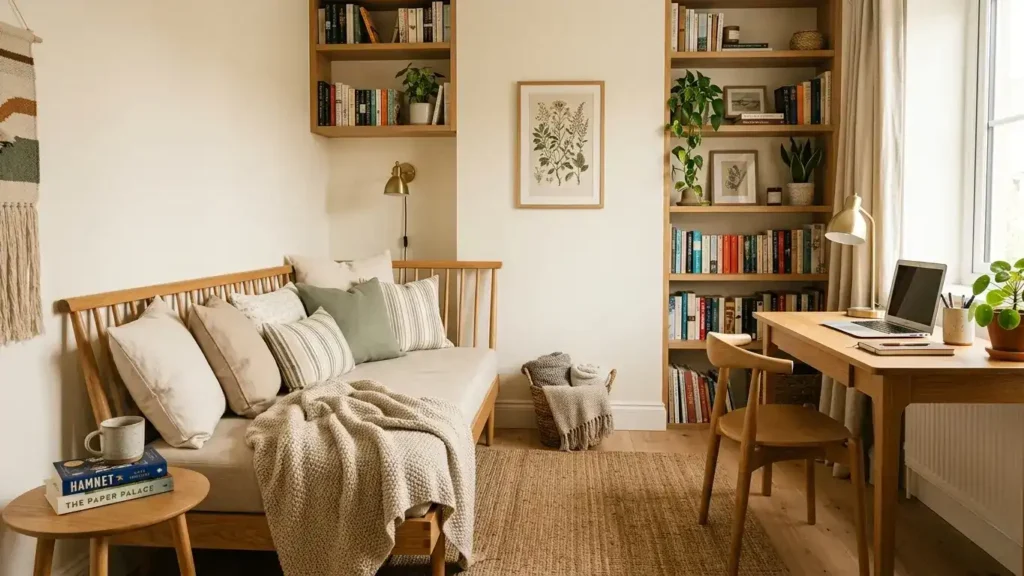
If you have a guest room that sits empty most of the time, a daybed turns it into a usable room during the day without making it look like all you’ve done is point a bed at the wall. Add a reading lamp, a small side table, and cushions and it functions as a proper sitting room when no one’s staying over.
If you’re in a studio apartment and you need something that can function as a sofa and a bed without taking up double the floor space, a daybed against a wall is a cleaner solution than a pull-out sofa bed and generally more comfortable to sleep on.
If you have a home office that also needs to double as a guest room when people visit, a daybed is one of the few pieces of furniture that genuinely works in both roles without compromising either.
If you have a child or teenager who wants a bed that also functions as somewhere their friends can hang out, a daybed with a trundle underneath handles both the daily seating and the sleepover sleeping without requiring a second piece of furniture.
Who it doesn’t work as well for
A daybed is a twin-size sleeping surface in most configurations. If you’re a couple and you both need to sleep in it, it doesn’t work. You’d need a full or queen size bed frame.
If you want something that reads as a proper full-sized sofa with deep seating and generous cushions, a daybed isn’t quite that. The seating depth is narrower and the back panel is lower than a standard sofa. It reads as sofa-adjacent rather than an actual sofa replacement for most people.
And if getting up from a low frame is difficult for you physically, it’s worth checking the frame height before ordering. Some daybed frames sit quite close to the floor, which suits a low-profile aesthetic but can be less practical for anyone with mobility considerations.
Is it worth considering?
For the right situation, yes. A daybed is one of the few pieces of furniture that genuinely does two things well without doing either badly. The sleeping surface is a proper mattress on a solid frame, which is more than you can say for most pull-out sofa beds at the same price. And the sofa function works well enough that the room doesn’t have to look like a bedroom during the day.
The key is matching it to your actual situation. A guest room that needs to function as a sitting room during the week. A studio that needs a proper sleeping surface but can’t dedicate a full wall to a bed. A home office that occasionally needs to sleep someone. Those are the scenarios where a daybed earns its place.
If you’re ready to look at specific options, our guide to the best daybeds for small spaces covers the top picks across different styles, materials and budgets so you can find the one that fits your room without spending an afternoon going in circles.
And if you’re drawn to the idea of styling a daybed well rather than just having it sit there looking like a spare bed, our article on daybed ideas covers the different ways to set one up so it actually looks intentional.
Research on how bedroom and living space design affects daily comfort consistently points to the same conclusion: furniture that does more than one thing well has a measurable impact on how settled and functional a small space feels day to day.