
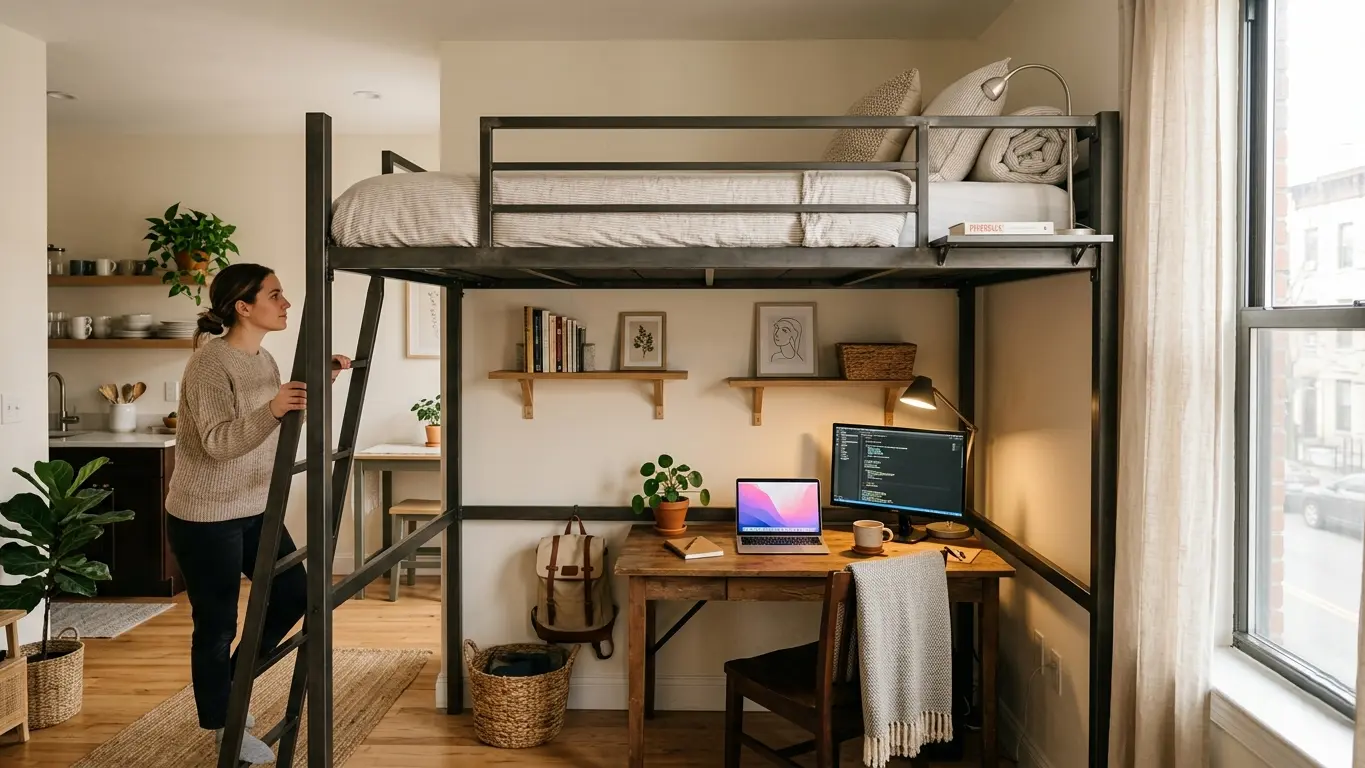
Ask most people what a loft bed is and they’ll picture a child’s bedroom, something with a slide attached, maybe some built-in shelves shaped like a castle. That image is hard to shake. But loft beds have quietly become one of the more practical furniture options for adults living in small spaces, and the reason is simple: they turn dead vertical space into something genuinely useful.
So here’s a proper answer to both questions. What a loft bed actually is, how it works, and whether it makes any sense for an adult.
What a loft bed actually is
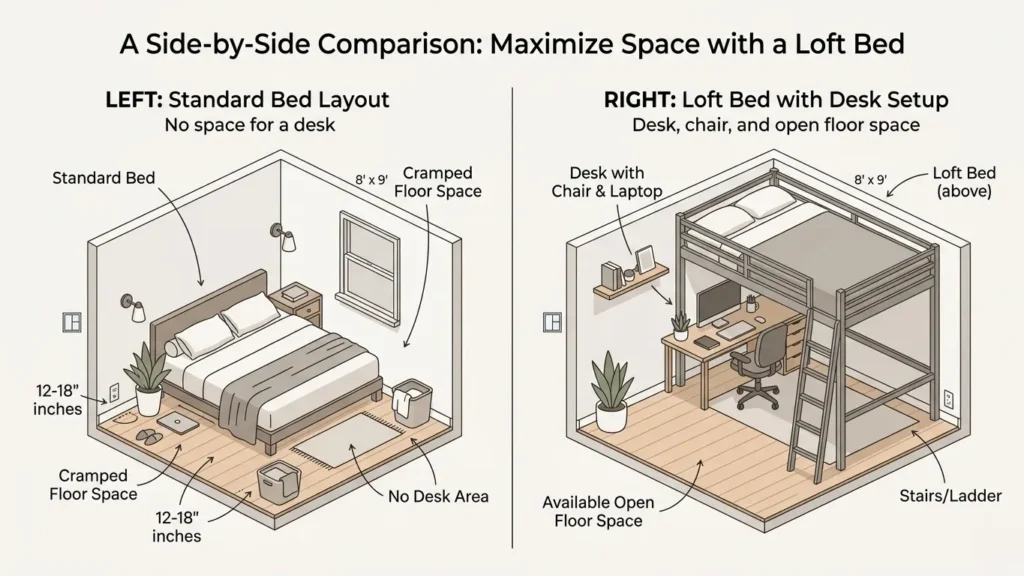
A loft bed is a raised bed frame that sits high enough off the ground to leave usable space underneath. That’s the whole idea. Instead of a standard bed sitting a few inches above the floor with nothing but dust and the occasional lost sock underneath, a loft bed puts the sleeping area up high and frees up the floor space below for something else entirely.
That something else could be a desk, a wardrobe, a small sofa, shelving, or just open floor space that makes a tiny room feel less cramped. The bed is still a bed, it sleeps exactly the same way, it just sits higher and does more with the space it takes up.
Most loft beds range from around 60 to 75 inches tall at the top of the frame, with the sleeping platform sitting at roughly 50 to 60 inches off the ground. That leaves anywhere from 40 to 55 inches of clearance underneath depending on the specific model, which is enough for a full desk setup, a comfortable seated workspace, or a wardrobe with hanging space.
How it’s different from a bunk bed
People often use the terms interchangeably but they’re not the same thing. A bunk bed has two sleeping levels, one on top of the other. A loft bed has only one sleeping level, raised up, with the space below left open for you to use as you want.
That distinction matters practically. A bunk bed is designed to sleep two people. A loft bed is designed to give one person more usable floor space. If you’re furnishing a shared kids’ room, a bunk bed makes sense. If you’re furnishing a studio apartment or a small bedroom that needs to double as a home office, a loft bed is a different proposition entirely.
We cover this comparison in more detail in our article on loft beds vs bunk beds, including which one makes sense for different situations.
The different types
Loft beds come in a few different configurations and it’s worth knowing what you’re looking at before you start shopping.
Basic loft bed
Just the raised frame with an open space below. No desk, no wardrobe, no built-in extras. You furnish the space underneath yourself. This gives you the most flexibility since you can set it up exactly the way you want, but it also means buying the desk or shelving separately.
Loft bed with desk
The most popular configuration for adults, and for good reason. The desk is built into the frame underneath the sleeping platform, often as an L-shape or U-shape that wraps around the corner. You get a dedicated work area that doesn’t take up any additional floor space beyond the bed footprint itself. Most of these also come with built-in storage drawers, shelving, and charging stations.
Loft bed with wardrobe
The wardrobe section is built into the frame alongside or underneath the sleeping platform. Useful in studios or small bedrooms where there’s no built-in storage for clothes. Some models combine a wardrobe on one side and a desk on the other, which covers almost all your storage and workspace needs in a single piece of furniture.
Loft bed with stairs
Instead of a standard vertical ladder, these use a small staircase to reach the sleeping platform. The stairs are more comfortable for daily use, especially for adults, and often have built-in storage on each step. The trade-off is that the staircase takes up a bit more floor space than a ladder.
So is it just for kids?
No, though it’s easy to see why the association sticks. Loft beds became popular in children’s bedrooms first because kids don’t mind climbing a ladder and parents liked the novelty of it. The furniture industry mostly marketed them that way for years.
What’s changed is the housing situation. Studio apartments, small one-bedroom flats, and compact urban living have created a real demand for furniture that does more than one thing. A loft bed in a small adult bedroom or studio apartment isn’t a novelty, it’s a practical response to not having enough floor space for both a bed and a desk.
There are adult-specific considerations that matter though. Weight capacity is the main one. Many budget loft beds are designed primarily for children and have weight limits that aren’t appropriate for most adults. If you’re buying one as an adult, you need to check the weight rating carefully and make sure it’s rated for your body weight plus the mattress weight. We go into this in detail in our article on whether loft beds are safe for adults.
What size mattress does a loft bed take?
Most loft beds are designed around standard mattress sizes, so there’s no special mattress required. Twin, full, queen and even some king size loft beds exist, though the most common sizes for small space living are twin and full.
A twin loft bed is 38 inches wide and works well for a single adult in a very compact space. A full size is 54 inches wide and gives you more comfortable sleeping room without dramatically increasing the overall footprint. Full size is generally the better choice for most adults unless the room is genuinely tiny.
One thing to pay attention to is mattress thickness. Most loft beds recommend a mattress between 4 and 10 inches thick. A thicker mattress reduces the gap between you and the guardrail at the top, which affects both comfort and safety. Check the product listing for the recommended thickness before you buy your mattress separately.
What to think about before buying one
Ceiling height is the practical constraint that catches most people out. You need enough clearance above the mattress to sit up comfortably, which typically means at least 24 to 30 inches between the top of your mattress and the ceiling. Most loft beds stand between 65 and 75 inches tall including the frame, so you’re looking at a minimum ceiling height of around 100 inches to make it work comfortably.
Room layout matters too. The staircase or ladder needs somewhere to sit, and the desk or storage space underneath needs to be accessible. It’s worth sketching out your room before ordering rather than figuring it out after the delivery van has left.
Assembly is involved on almost every loft bed. Most require two people and a solid block of time. The frames are often heavy and the number of components is substantial. Don’t plan to put it together alone the evening it arrives.
Who they actually work well for
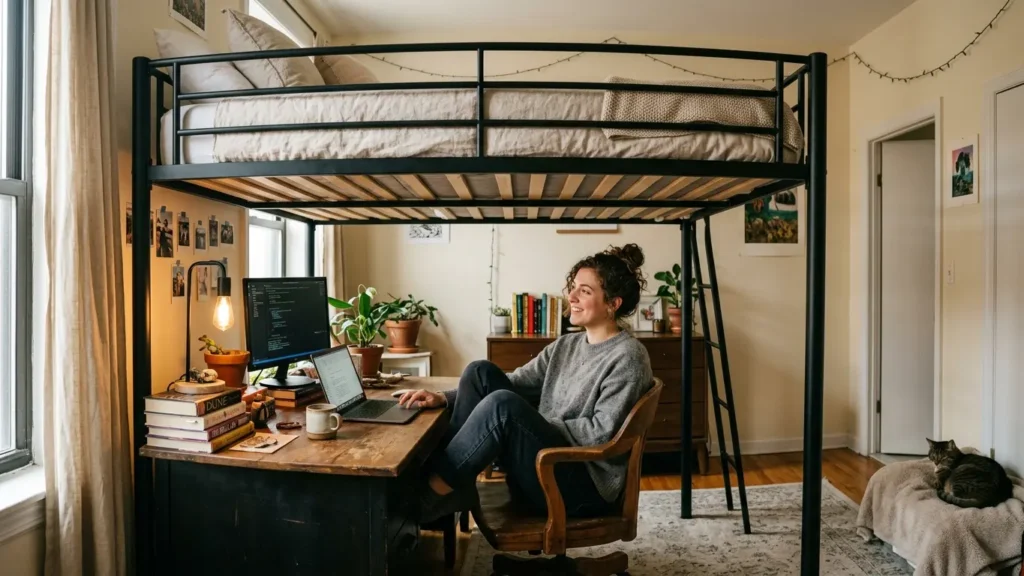
A loft bed makes the most sense if you’re working with limited floor space and need your bedroom to do more than one thing. Students in small rooms, people in studio apartments, remote workers without a dedicated office, anyone who needs a proper workspace in a bedroom that isn’t big enough for a bed and a separate desk.
They’re less suited to people who struggle with ladders or stairs, anyone with limited mobility, or people who want to access the bed quickly and easily multiple times a day. The raised sleeping position is a daily commitment and it’s worth being honest with yourself about whether that works for your lifestyle before buying.
If you’re sharing a small bedroom with a partner and you both need workspace, a loft bed with a large L-shaped or U-shaped desk can actually solve both the sleeping and working problem more efficiently than any other single piece of furniture at the same price. The space beneath a full or queen loft bed is genuinely substantial once you see it in person.
For anyone living in a small space and trying to make it work without adding more furniture, a loft bed is one of the few options that actually gives you back floor space rather than taking more of it. That’s what makes it worth considering beyond the age group it was originally marketed at.
Research on how room layout and available space affects daily stress and wellbeing consistently points in the same direction: more usable floor space in a small home has a measurable impact on how comfortable and settled you feel in it. A loft bed is one of the more direct ways to get that space back without moving somewhere bigger.