
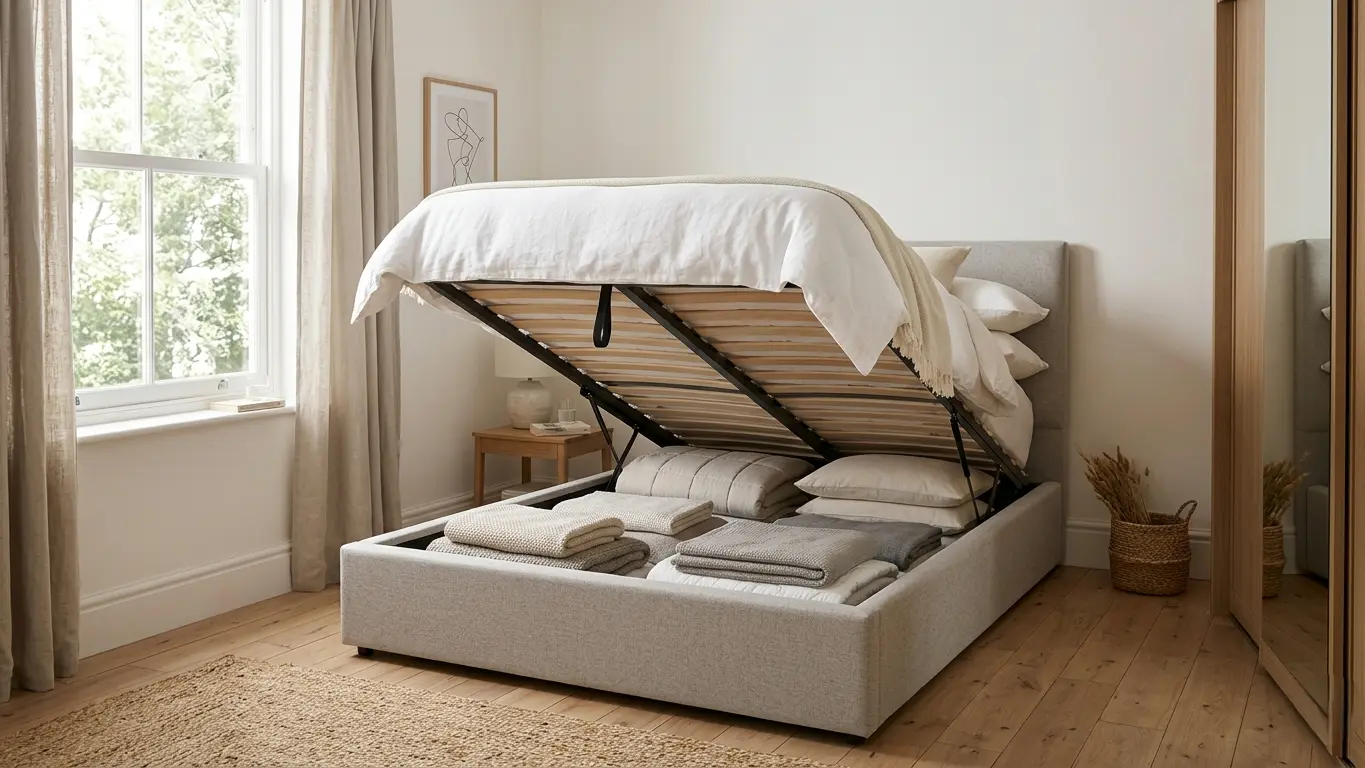
If you’ve been shopping for a bed and keep seeing the term ‘ottoman bed,’ you’re not alone in wondering what that actually means. It sounds fancy, but it’s actually one of the most practical bed types you can buy, especially if you’re working with a smaller bedroom or a flat where storage is always a challenge.
In this guide, we’ll cover exactly what an ottoman bed is, how the storage mechanism works, who it’s best suited for, and what to look for before you buy. No fluff, just the stuff you actually need to know.
What Is an Ottoman Bed, Exactly?
An ottoman bed is a bed frame with a built-in storage compartment underneath the mattress. Unlike a standard bed, where the space under the frame is either empty or used for loose storage, an ottoman bed has a structured lift-up base that reveals a large, clean cavity you can actually use.
The mattress and base lift up together, either from the foot of the bed or from the side, depending on the design. Once open, you have full access to the storage space underneath. It’s essentially a giant hidden drawer built into the bed itself.
This is why ottoman beds have become so popular in apartments and smaller homes. You get a proper bed and a proper storage solution in a single piece of furniture, without needing to find room for extra wardrobes, chests of drawers, or under-bed boxes.
How Does an Ottoman Bed Actually Work?
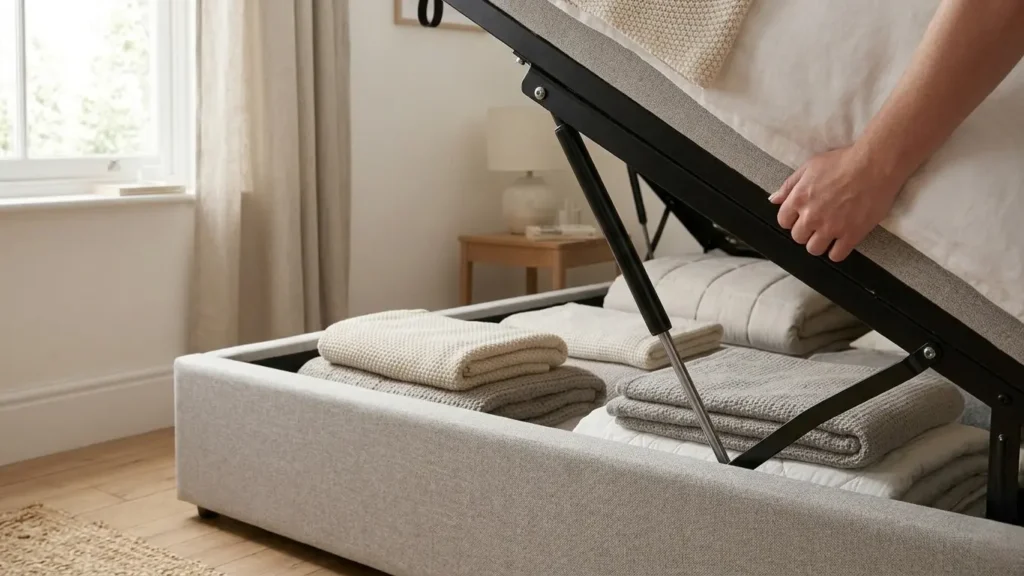
The mechanism is simpler than it looks. Ottoman beds use either gas lift pistons or a spring-loaded system to support the weight of the mattress while you open and close the base. This means you’re not straining to lift a heavy mattress on your own, the mechanism does most of the work for you.
Here’s a quick breakdown of the main components:
- Lift base: The solid platform your mattress sits on, which lifts up as one unit.
- Gas pistons or springs: These are attached to the sides or foot of the frame and support the base as it lifts, keeping it open while you access the storage.
- Storage cavity: The entire area under the base, which is usually lined with fabric or a solid material to keep your belongings clean and dust-free.
- Outer frame: The visible part of the bed, which comes in a wide range of upholstered or wooden finishes depending on the style.
To open the bed, you simply lift from the foot end or the side (depending on the lift direction), and the base rises smoothly. To close it, you lower the base back down gently until it clicks or rests back into the frame.
Gas Lift vs Spring: What’s the Difference?
Most modern ottoman beds use gas lift pistons, which give you a smooth, controlled lift and hold the base open securely. Some older or budget models use a simpler spring mechanism, which can be a bit more abrupt and may not hold as consistently over time.
If you’re buying a bed you plan to use regularly, gas lift is worth paying a little extra for. It’s noticeably easier to use and tends to last longer. We cover this in more detail in our guide to gas lift vs side lift ottoman beds.
Foot End Lift vs Side Lift: Which One Opens Where?
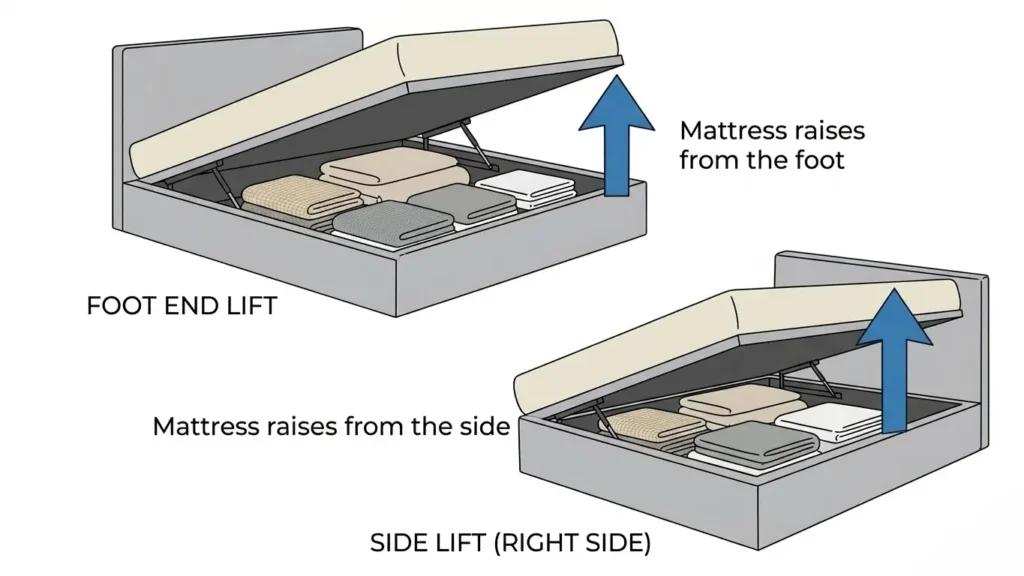
This is one of the most important things to check before buying, because it affects where you can actually position the bed in your room.
A foot end lift ottoman opens from the bottom of the bed. This means you need clear floor space at the foot of the bed to lift and access the storage. If your bed is pushed up against a wall at the foot end, this style won’t work for you.
A side lift ottoman opens from the left or right side of the bed. This is ideal if you have more space on one side of the room, or if your bed sits with the foot end close to a wall or wardrobe.
In small bedrooms or studio apartments, side lift ottomans are often the better option because they give you more flexibility with how you position the bed against walls.
What Can You Actually Store in an Ottoman Bed?
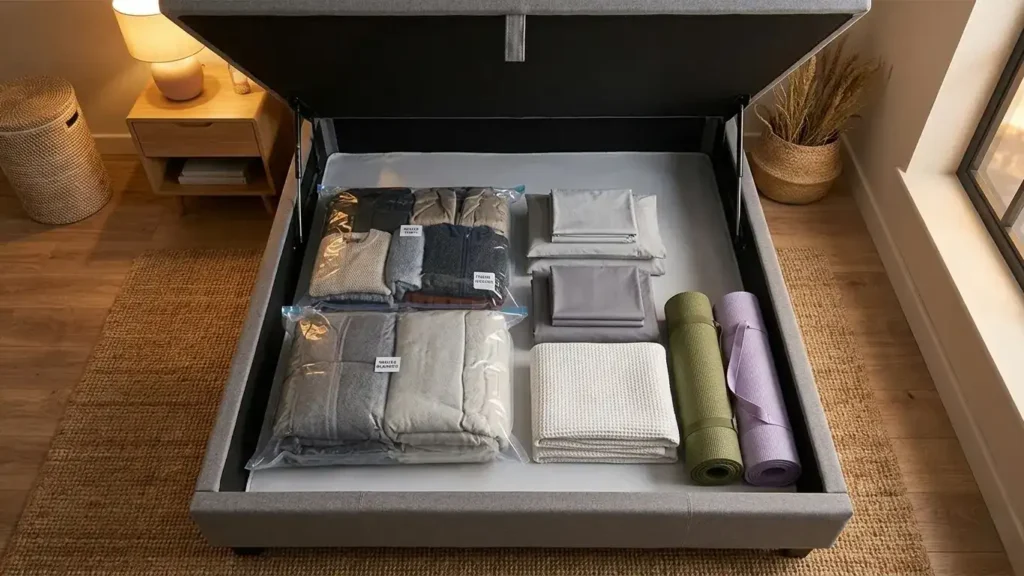
A lot more than you’d think. The storage cavity in a double or king size ottoman bed is genuinely large, often comparable to a full chest of drawers in total volume.
Common things people store in an ottoman bed include:
- Extra bedding, duvets, and spare pillows
- Out-of-season clothing
- Towels and linens
- Shoes or boots
- Sports equipment, yoga mats, or small bags
- Books, boxes, or anything you want out of sight but close at hand
The one thing to be mindful of is weight. Most gas lift systems are designed to handle a full storage load alongside a mattress, but very heavy or dense items can wear the lift mechanism down faster. Stick to soft goods and lighter items where possible, and you’ll get years of reliable use out of it.
If you’re curious about exact capacity, we have a dedicated post breaking down how much a double storage bed can actually hold.
Who Is an Ottoman Bed Best Suited For?
Ottoman beds work well for a lot of different situations, but they’re particularly well suited to:
- Small bedroom owners:
If your bedroom doesn’t have space for a wardrobe, a chest of drawers, or both, an ottoman bed lets you reclaim that storage without adding a single piece of extra furniture. - Apartment renters:
Rented flats often come with limited built-in storage. An ottoman bed is a furniture solution that moves with you when you leave. - Guest room setups:
A bed that also stores spare bedding is a genuinely clever solution for a room that doubles as an office or hobby space. - Anyone who hates clutter:
The storage is completely hidden when the bed is closed, which means it keeps the room looking tidy without requiring any extra organisation.
Ottoman Bed vs a Regular Bed: Is the Upgrade Worth It?
Ottoman beds typically cost more than a standard bed frame of the same size and style, and that’s the trade-off you’re making. You’re paying for the storage mechanism, the reinforced base, and the build quality needed to support the lift system reliably over time.
For most people in smaller homes or flats, the extra cost is worth it. The storage you get would otherwise require buying a separate chest of drawers or wardrobe, which would cost at least as much and take up valuable floor space.
If you’re comparing it to a standard divan with built-in drawers, the ottoman offers significantly more storage in a cleaner package. Drawer divans only give you access to the side of the bed, whereas an ottoman opens the entire floor area underneath.
What Sizes Do Ottoman Beds Come In?
Ottoman beds are available in all standard sizes, from single through to super king. The most popular sizes for smaller bedrooms and apartments are double and small double, as they offer a good balance of sleeping space and storage volume without taking over the room.
A double storage bed is the sweet spot for most single occupants or couples living in a flat. It gives you enough sleeping space for two, a large storage cavity underneath, and it fits comfortably in most standard UK and US bedroom sizes.
King and super king ottoman beds are available too, but the bigger the bed, the heavier the base, so make sure the lift mechanism is rated for the size you choose.
Things to Know Before Buying an Ottoman Bed
Before you commit, a few practical things are worth checking:
- Lift direction: Check whether the bed lifts from the foot end or the side, and make sure that works with your room layout.
- Weight rating: Look for a gas lift system with a decent weight rating. Cheaper models can struggle after a year or two of regular use.
- Base material: Is the storage area lined or finished properly? You want something that won’t scratch your belongings or collect dust easily.
- Mattress compatibility: Ottoman beds work with most standard mattresses, but check the manufacturer’s recommendations, especially for memory foam or heavier hybrid mattresses.
- Room clearance: Make sure there’s enough space to fully lift the base without it hitting a low ceiling, a shelf, or a wall-mounted light.
Are Ottoman Beds Difficult to Use Every Day?
Not really, once you get used to it. The gas lift mechanism on a well-made ottoman bed does most of the heavy work, so you’re not straining your back every time you need to get something out.
That said, you don’t want to be opening and closing it multiple times a day. Ottoman beds work best as occasional access storage, think weekly or a few times a month rather than a daily drawer you’re in and out of constantly. If you need daily access storage, a bedside table or a chest of drawers nearby will serve you better for that.
We answer this in more depth in our article on whether ottoman beds are hard to lift every day, including what to look for in a lift mechanism if you know you’ll be using it frequently.
Frequently Asked Questions
Is an ottoman bed the same as a storage bed?
Not exactly. Both have under-bed storage, but ottoman beds lift the entire base to reveal one large open cavity, while storage beds typically have side-opening drawers. Ottoman beds generally offer more total storage space and a cleaner look.
Can you use any mattress on an ottoman bed?
Most standard mattresses work fine. Pocket spring, memory foam, and hybrid mattresses are all compatible with ottoman bases. Just check the weight limit of the lift mechanism if you’re using a particularly heavy mattress.
Are ottoman beds good for small bedrooms?
Yes, they’re one of the best options for small bedrooms precisely because they replace multiple pieces of storage furniture in one. If you’re short on floor space, an ottoman bed lets you maximise the room without filling it with extra wardrobes or drawers. Our article on whether ottoman beds are worth it in small bedrooms goes into this in more detail.
What is a double storage bed?
A double storage bed is simply a double-sized bed with built-in storage, usually an ottoman lift system or drawers. It’s one of the most popular configurations for smaller flats and apartments because it fits a standard double bedroom while offering significantly more storage than a regular bed.
So, Is an Ottoman Bed Right for You?
If you’re living in a flat or a smaller home and you’re constantly battling a lack of storage, an ottoman bed is one of the most practical upgrades you can make to your bedroom. It does two jobs at once, gives you a proper night’s sleep and frees up space in the rest of the room, without making the room feel more cluttered.
The key is picking the right size, the right lift direction for your room, and a model with a reliable gas lift mechanism that’ll hold up over time.
If you’re ready to look at actual recommendations, our guide to the best ottoman beds for small apartments runs through the top options across different budgets and room sizes. Research on how bedroom environment affects sleep quality shows that getting your storage sorted properly has benefits beyond just tidying up the room.