
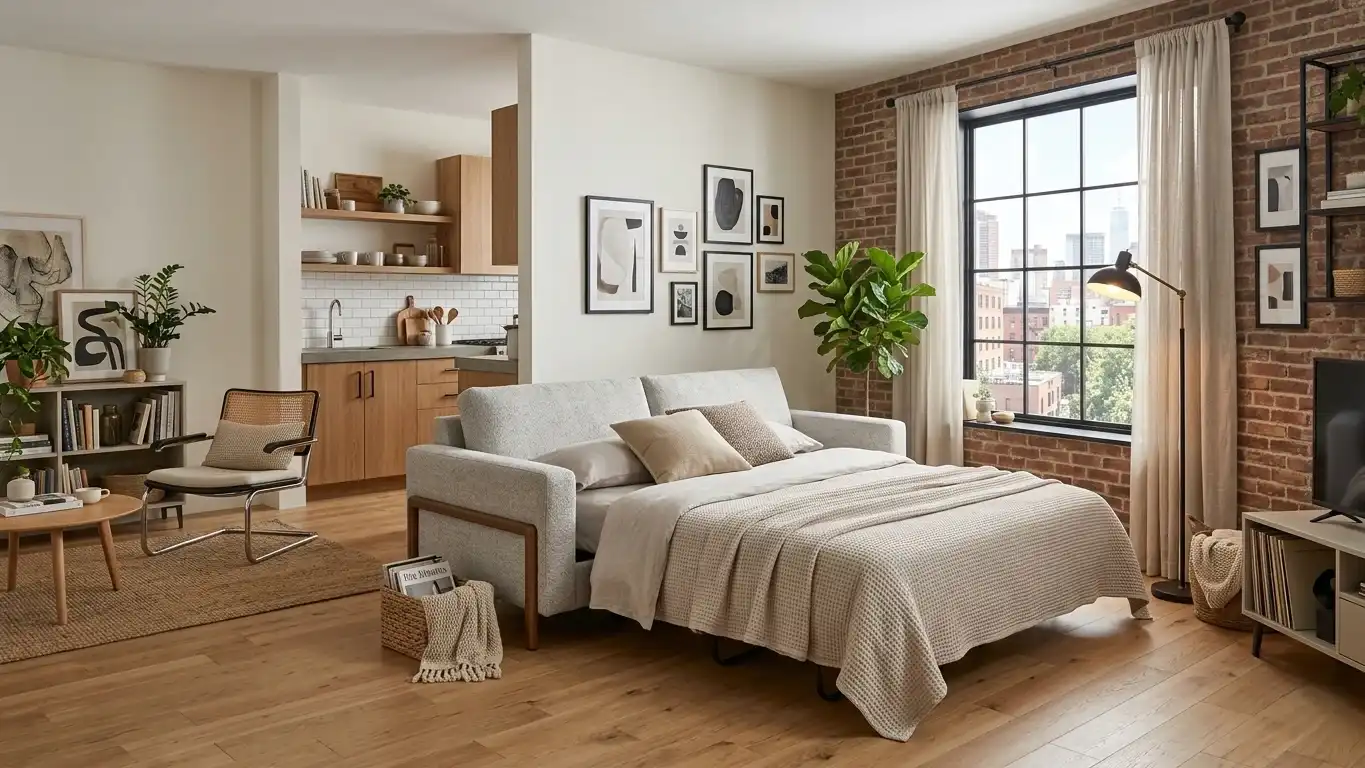
A sofa bed is exactly what it sounds like: one piece of furniture that works as a sofa during the day and a bed at night. During the day you sit on it. When a guest arrives, or when you need the sleeping surface yourself, it converts into a bed.
That’s the simple version. The longer version is that sofa beds come in several different types, with different mechanisms, different comfort levels, and different space requirements. Getting the wrong one for your situation is a common and avoidable mistake.
This guide covers how sofa beds work, the main types available, what affects comfort, and what to check before you buy.
How Does a Sofa Bed Work?
The basic idea is the same across all types: the furniture converts from seating into a flat sleeping surface. How it does that depends on the design.
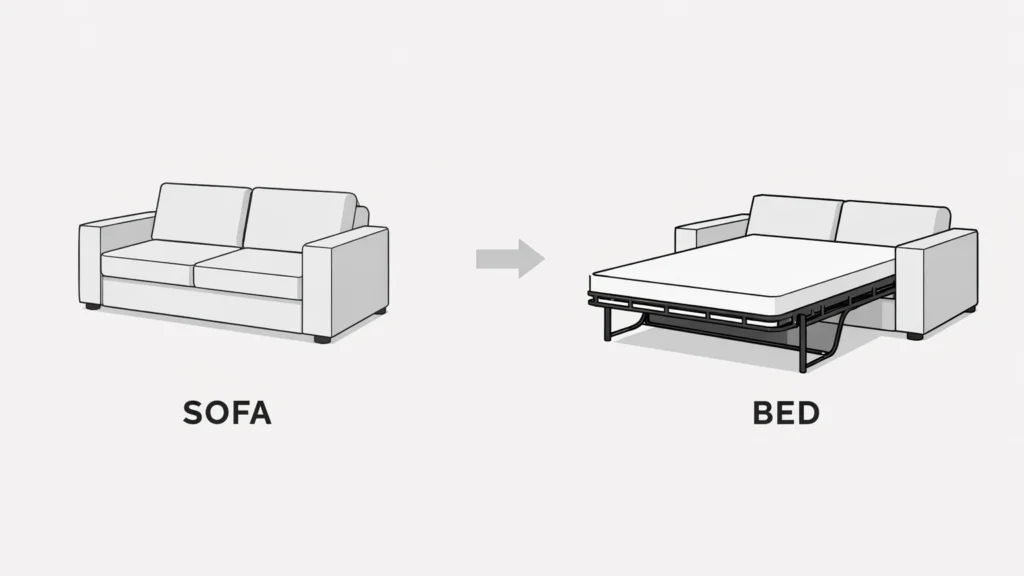
The most common version hides a folded mattress inside the frame. You remove the seat cushions, pull a handle, and a metal frame unfolds with a mattress already attached. This is what most people picture when they hear the words sofa bed or sleeper sofa.
Other designs are simpler. Some fold the backrest flat. Some slide a section forward. Some are more like a thick cushion on a frame that flattens when you push it down.
The mechanism affects comfort, price, how much space you need, and how much effort the conversion takes. It’s worth understanding before you buy, not after.
The main types of sofa bed
1. Pull-out sleeper sofas
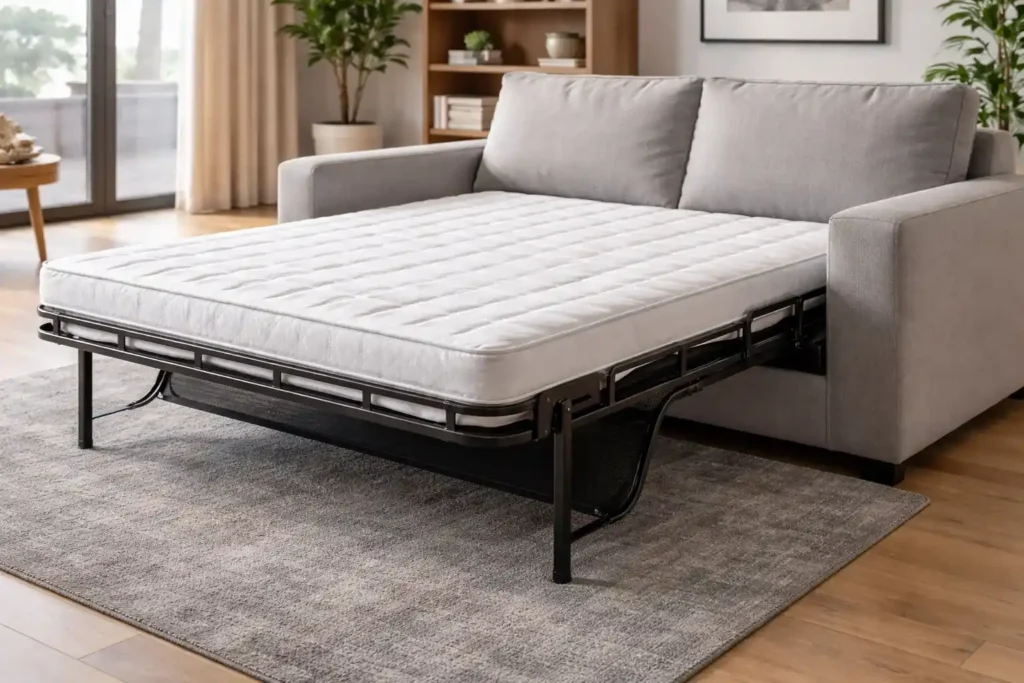
This is the most common type. A folded mattress is stored inside the frame, hidden under the seat cushions. To open it, you remove the cushions and pull the frame forward until the mattress unfolds flat.
Because the mattress is separate from the seat cushions, a good quality pull-out sleeper sofa can feel reasonably close to a proper bed. You’ll find them in twin, full, and queen sizes. A sleeper sofa queen gives two adults enough room to sleep comfortably.
The trade-off is that the frame needs clear floor space in front of the sofa to extend fully. In a tight room that matters. Before buying, measure the room with the bed in the open position, not just the sofa.
Best for:
- Frequent overnight guests
- Living rooms with enough clearance in front of the sofa
- Anyone who wants a proper mattress rather than a cushion to sleep on
2. Futon Style Sofa Beds
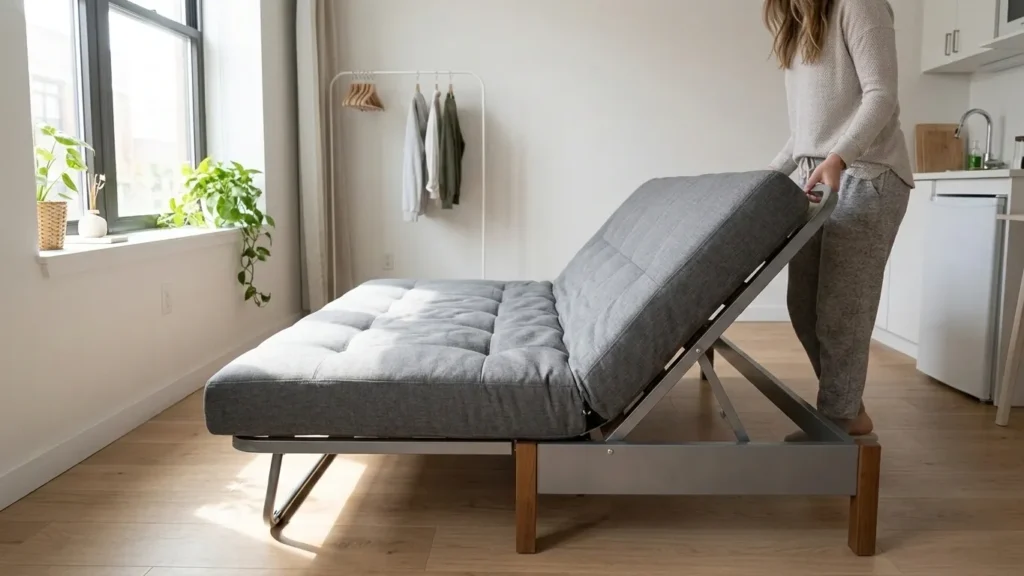
A futon works differently. Instead of pulling out a hidden mattress, the backrest folds flat so the whole surface becomes the sleeping area. The seat cushion doubles as the mattress.
This is simpler mechanically, which usually makes it cheaper and lighter. The comfort depends entirely on the cushion. A dense, high-quality futon cushion can be fine for occasional use. A thin one will make itself known by morning.
Futons suit small spaces well because they don’t need the same forward clearance a pull-out does. They’re also easier to move if you rearrange frequently.
Best for:
- Studio apartments
- Occasional guests
- Anyone working with a tight budget or a tight floor plan
3. Sectional Sleeper Sofas
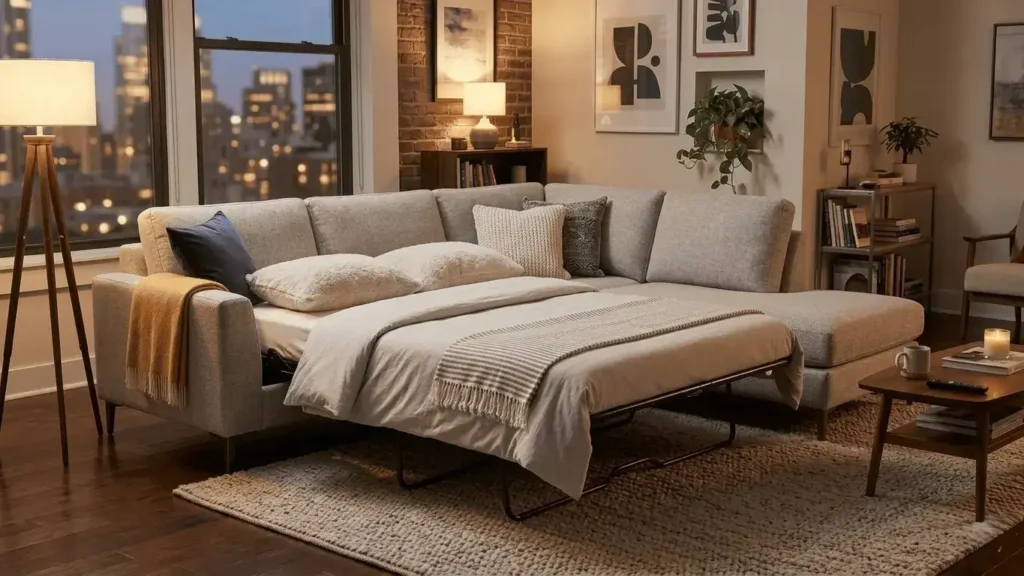
A sectional sleeper sofa is a large L-shaped sofa with a hidden pull-out mattress built into one section. During the day it functions as a proper sectional with generous seating. At night the mattress extends from inside the frame.
The advantage is the combination of serious seating capacity and a proper sleeping surface. The constraint is size. A sectional takes up significantly more floor space than a compact sofa bed, so the room layout needs to support it.
Best for:
- Larger apartments and family living rooms
- Anyone who hosts regularly and wants a proper couch to go with the sleeping function
4. Corner Sofa Beds
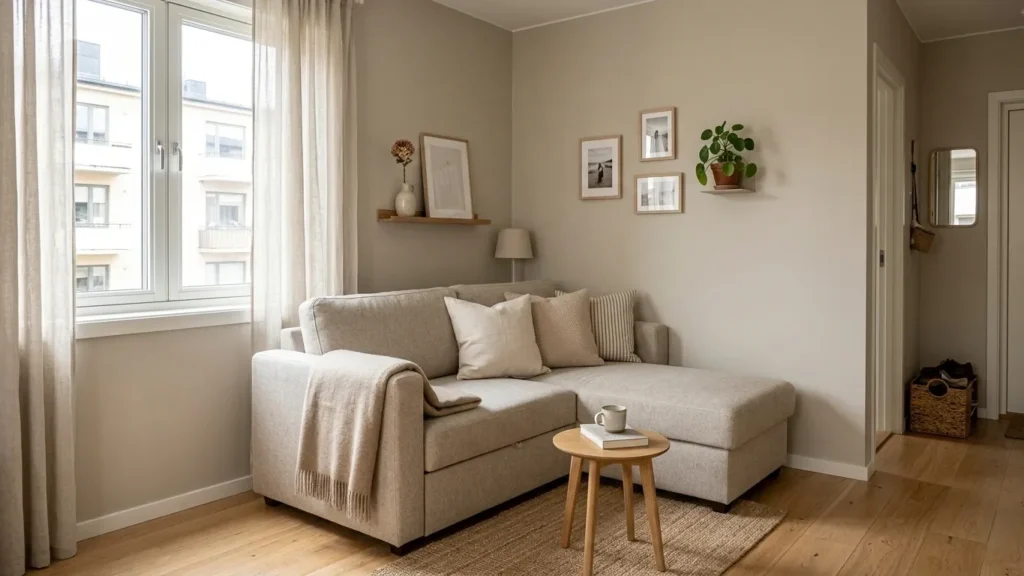
A corner sofa bed is shaped to sit in a corner, with seating running along two walls. Many include built-in storage under the chaise section, which is useful for keeping bedding out of sight when the sofa is in its daytime setup.
They’re efficient in compact layouts where a corner is otherwise unused, and they give the room a clear, anchored structure without furniture floating across the middle of the space.
Best for:
- Urban apartments and tight layouts
- Rooms where the corner is the best use of wall space
- Anyone who wants storage built into the furniture
Quick comparison: which type suits which situation?
| Type | Mechanism | Mattress feel | Space needed | Best for |
| Pull-out sleeper sofa | Hidden mattress unfolds on metal frame | Closest to a real bed | Needs front clearance | Frequent guests, regular use |
| Futon-style | Backrest folds flat | Depends on cushion density | Minimal clearance | Small spaces, occasional use |
| Sectional sleeper sofa | Hidden mattress in one section | Close to a real bed | Largest footprint | Families, regular hosting |
| Corner sofa bed | Varies by model | Varies by model | Uses corner efficiently | Compact apartments, storage |
Are Sofa Beds Comfortable?
The honest answer is: it depends on the type and the quality.
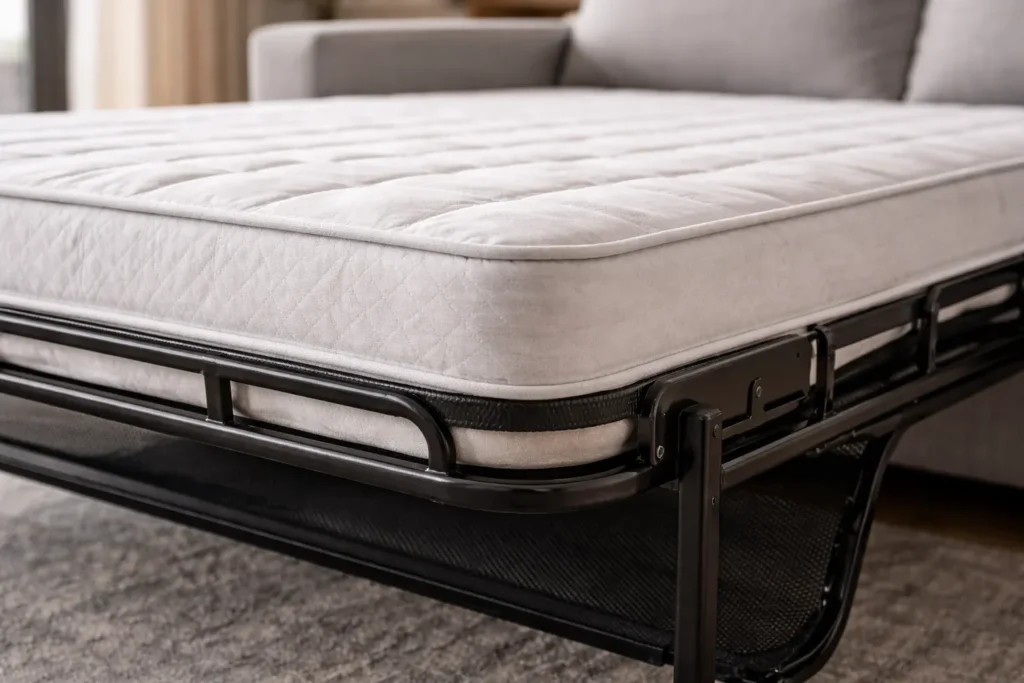
A pull-out sleeper sofa with a thick memory foam or high-density mattress can be genuinely comfortable for most guests for a few nights. A cheap version with a thin spring mattress will feel like what it is.
Futon-style sofa beds are firmer. Some people sleep fine on them. Others find the fold point noticeable by morning. Cushion density is everything with a futon.
For occasional guests, a decent quality sofa bed is usually comfortable enough. For nightly use as your main sleeping surface, the choice of model matters considerably more. We cover this properly in our full guide on whether sofa beds are comfortable for everyday sleeping — worth reading if that’s your situation.
What affects comfort
Three things matter more than the brand name or the price tag.
Mattress thickness and support.
On a pull-out model, a thicker mattress with good foam density makes a real difference. Anything under four inches is going to feel thin for an adult. Memory foam tends to perform better than basic spring systems at the same depth because there’s no metal bar pressing through a thin layer.
Frame quality.
A poorly built folding frame creates pressure points and can wobble when someone turns over. This is hard to assess from a product photo. If you can, test the frame in a showroom or read reviews specifically about long-term use.
Cushion density on fold-flat models.
On futon-style sofa beds, the cushion is the mattress. Higher density foam holds its shape better over time. Cheap foam compresses quickly and the sleeping surface ends up uneven after a few months.
What to check before you buy
- Open dimensions. Most people measure the sofa and forget to measure it as a bed. A pull-out model extends forward significantly. Measure from the wall to the far edge of the mattress when fully open and confirm that space is actually available in your room.
- Mattress thickness. Check the spec sheet, not just the photos. Anything described as a mattress without a thickness listed should be treated with caution.
- The mechanism. If you can try it in person, open and close it a few times. A stiff or awkward mechanism doesn’t get better with use. It gets worse.
- Weight rating. Some smaller models are built with lighter loads in mind. Check the listed weight capacity before assuming it handles two adults without issue.
- Your actual use case. A sofa bed used twice a year for visiting family needs to meet a very different standard than one slept on every night. Be honest about how it will actually be used before deciding how much to spend.
Pros and cons at a glance
| Pros | Cons |
| Saves space — one piece handles seating and sleeping | Pull-out models are heavy and hard to move |
| Better than an air mattress for overnight guests | Lower-end models sacrifice mattress quality |
| Modern designs look like proper living room furniture | Not a true replacement for a dedicated bed |
| Some models include built-in storage | Pull-out types need front clearance when open |
For a proper breakdown of each advantage and disadvantage, our article on the pros and cons of sofa beds covers them in more detail.
One naming thing worth knowing
If you’ve seen the terms sofa bed, sleeper sofa, and pull-out couch used as if they’re the same thing, that’s because retailers often use them interchangeably. Technically they’re not identical. A sleeper sofa specifically refers to the pull-out type with a hidden mattress. A sofa bed is the broader category that includes futons, corner designs, and fold-flat models too. Our guide on the difference between a sofa bed and a sleeper sofa explains this clearly if the terminology has been confusing you while shopping.
Who a sofa bed actually makes sense for
A sofa bed is a practical choice if you:
- Live in a studio or small apartment and can’t fit a separate guest bed
- Host overnight guests occasionally and want something better than an air mattress
- Are furnishing a room that needs to do more than one thing at once
It makes less sense if you have the space for a dedicated bed and comfort is the priority, or if you need something slept on every single night by someone with specific support needs. In that case a proper bed frame and mattress will outperform a sofa bed.
If you’re ready to look at specific options, our guide to the best sofa beds for small apartments covers the top picks across different types and budgets.
Sofa beds have improved considerably over the years. If you want to understand what current mattress standards actually mean for sleep quality, the Sleep Foundation’s guide to mattress types covers foam density, spring counts, and what they mean in practice — useful context if you’re trying to compare models beyond the marketing language.