
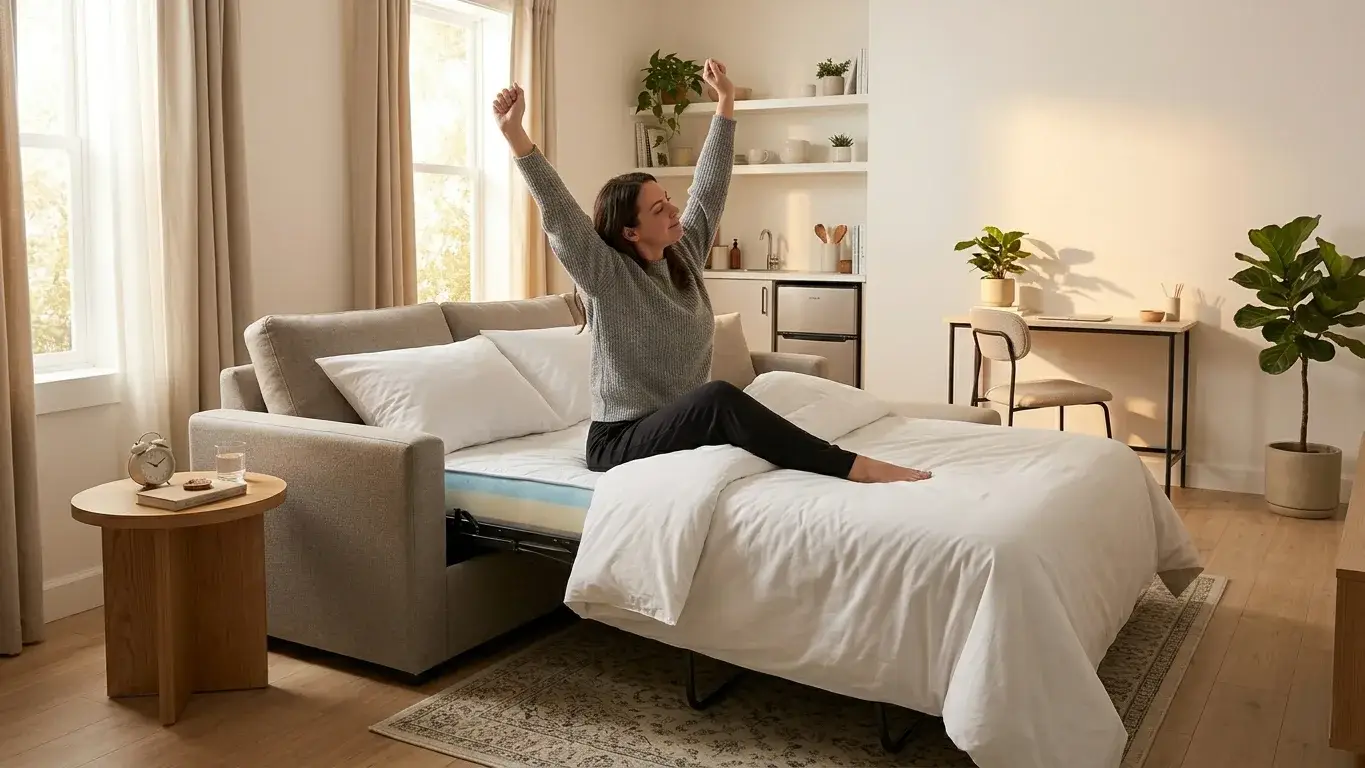
Yes, a sofa bed can be comfortable for everyday sleeping. But only if you choose the right type, and no, not all of them are built for that.
Some are genuinely fine for nightly use. Some are good enough for guests a few times a year. And some will have your back complaining within a week. The difference comes down to construction, not what the product is called.
This article goes through what actually affects comfort, which types hold up for regular use, and when a sofa bed is simply not the right answer.
What actually makes a sofa bed comfortable
Mattress thickness and what’s inside it
This is the single biggest factor. A pull-out sleeper sofa contains a dedicated mattress folded inside the frame. The quality of that mattress determines almost everything about the sleeping experience.
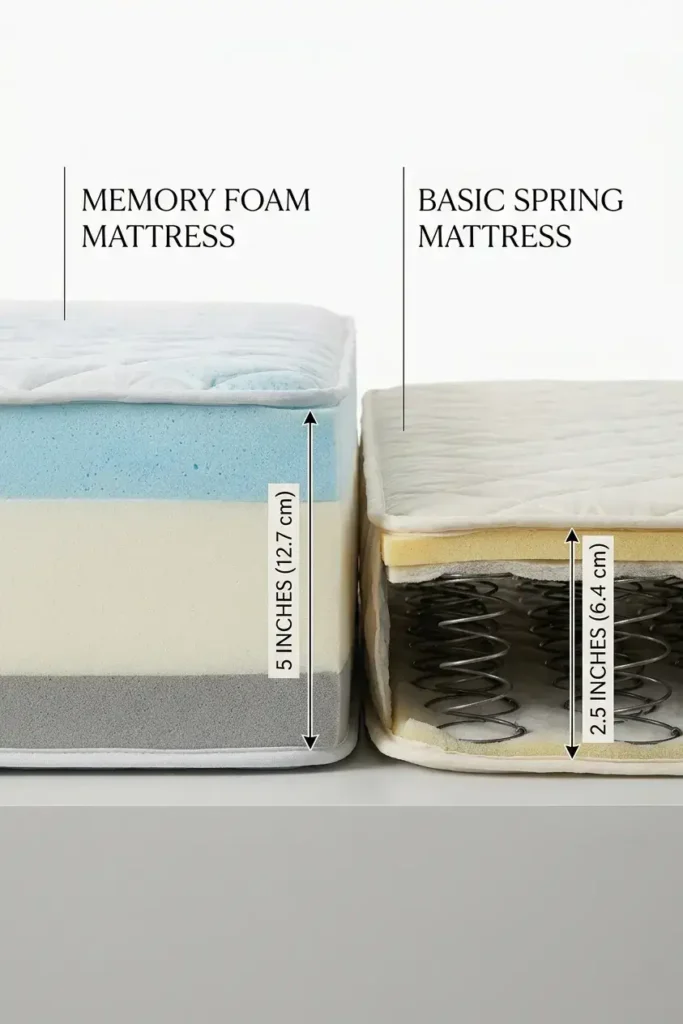
A thick memory foam mattress, 4 inches or more, distributes weight properly and doesn’t have the firmness issues that thinner options do. A thin spring mattress at the budget end of the market will feel noticeably different, particularly after a few nights.
Anything under 3.5 inches of mattress depth is going to feel thin for most adults. If a listing doesn’t specify mattress thickness, that’s usually a sign it’s not worth advertising.
The frame and what sits underneath the mattress
On pull-out models, the mattress sits on a metal folding frame. On older and cheaper designs, the bar where the frame folds can press through a thin mattress and become noticeable during the night. This is the classic sofa bed complaint, and it’s a real one.
Better quality models have addressed this with reinforced centre bars and thicker mattresses, but it remains something to check specifically in reviews. Look for any mention of the bar being noticeable. If multiple reviewers mention it, it will affect you too.
On fold-flat designs like futons, there’s no metal bar underneath, but the sleeping surface is only as good as the cushion density. A well-made futon cushion can work for regular use. A cheap one compresses over time and ends up uneven.
How often it will actually be used
A sofa bed used twice a year for visiting guests and a sofa bed slept on every single night are two completely different use cases, even if the product is identical.
For occasional use, a mid-range sleeper sofa with a reasonable mattress handles it well. For nightly use over months, the mattress and frame take considerably more wear, and the compromises become more apparent. This is why the question of everyday comfort can’t have a single yes or no answer.
Which types work best for daily sleeping
Pull-out sleeper sofas
The strongest option for daily use, provided the mattress is decent. A queen sleeper sofa with a memory foam mattress of 4 inches or more is the closest thing to sleeping on a proper bed within the sofa bed category. The frame needs to be solid, the mechanism smooth, and the mattress well supported underneath.
The size matters here too. A full or queen pull-out gives an adult enough room to sleep comfortably. A twin sleeper sofa is fine for one person but limits movement during the night in a way that adds up over time.
Sectional sleeper sofas
A well-built sectional sleeper sofa with a reinforced base and a proper mattress can work for regular use. The advantage over a standard pull-out is that the sectional frame tends to be heavier and more stable, which supports the mattress better.
The disadvantage is size and weight. In a small studio, a sectional sleeper sofa takes up significantly more room than a compact pull-out, which may not leave enough space around it to live comfortably.
Futon-style sofa beds
Futons can work for regular sleeping if the cushion is high quality and dense. The fold point in the middle is the main issue — on lower quality futons it becomes perceptible when lying down, particularly for side sleepers.
For daily use over a long period, a futon is more of a compromise than a pull-out with a proper mattress. For someone who prefers a firmer sleeping surface and doesn’t mind that trade-off, it can be a practical choice.
If you want practical guidance on how to position a sofa bed so it works properly in a small room, our article on how to arrange a sofa bed in a studio apartment covers the layout decisions that affect daily use.
When a sofa bed is not the right answer
Be honest about your situation before committing. A sofa bed is a compromise, and there are cases where that compromise is too significant.
- If you have back problems or specific support needs. A thin sofa bed mattress is unlikely to provide the targeted support a proper orthopaedic or firm mattress would. If back support is a medical consideration, a dedicated mattress is the more honest answer.
- If you have the space for a proper bed. A daybed takes up a similar footprint to a sofa bed in many layouts and gives you a proper mattress on a proper frame. If the room can fit a daybed, that’s usually a better nightly sleeping surface than a pull-out.
- If budget means you’re looking at the cheaper end. A cheap sofa bed is often worse than no sofa bed. The mattress is the first thing manufacturers cut at lower price points.
Quick reference by use case
| Situation | Sofa bed type | Verdict |
| Guests a few times a year | Any decent pull-out or futon | Works well, most options are fine |
| Guests staying 1 to 2 weeks | Pull-out with memory foam mattress | Works well with the right mattress |
| Nightly use in a studio | Queen pull-out, solid frame, 4 inch+ mattress | Can work, but invest properly |
| Nightly use with back issues | Any sofa bed | Not recommended, use a proper bed |
| Daily use on a tight budget | Futon with dense cushion | Acceptable if cushion quality is good |
What to look for when buying for daily use
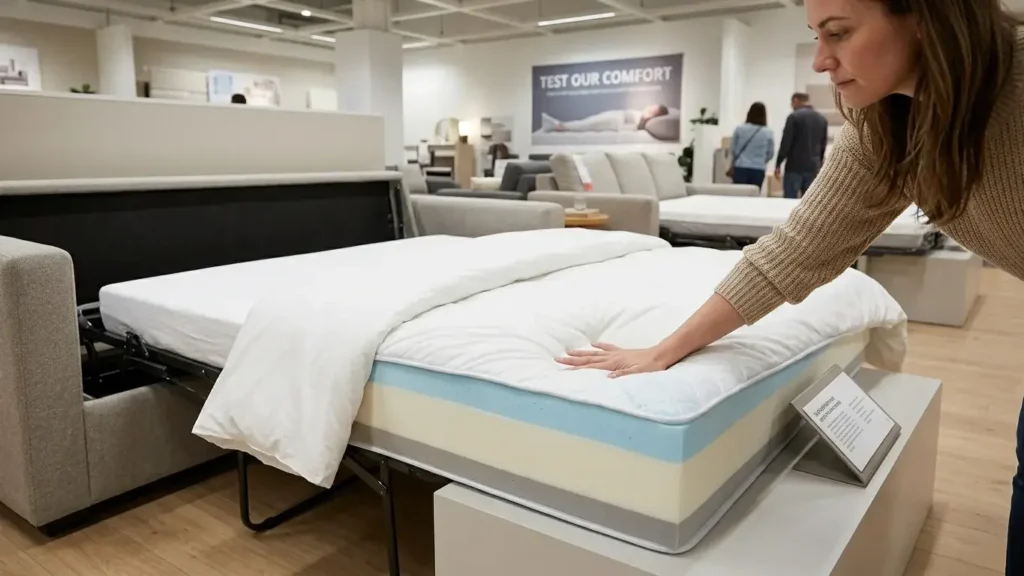
- Mattress thickness. 4 inches minimum for daily adult sleeping. 5 or 6 inches is noticeably better.
- Mattress type. Memory foam or pocket spring with foam layer. Avoid basic open-coil spring mattresses on cheaper models.
- Frame stability. Check reviews for any mention of wobble or noise when turning over during the night.
- Centre bar design. Look specifically for models with a reinforced or recessed centre bar. This is usually mentioned as a feature on better quality pull-outs.
- Size. A full or queen gives enough sleeping room for an adult. A twin works for one person but limits movement.
For a full look at the advantages and drawbacks of sofa beds beyond just comfort, our article on the pros and cons of sofa beds covers the practical trade-offs in more detail.
If you’ve decided a sofa bed is the right direction for your space and you’re ready to compare specific models, our guide to the best sofa beds for small apartments covers the top picks with honest notes on mattress quality and daily use suitability.
If you’re finding that the mattress compromise is the sticking point, a daybed is worth considering as an alternative. A daybed gives you a proper mattress on a proper frame, with a sofa-like profile during the day. Our comparison of a daybed versus a sofa bed for small apartments covers exactly this decision.
The Sleep Foundation’s guide on mattress types and what they mean for support is a useful reference if you want to understand the difference between memory foam, pocket spring, and open-coil options before comparing sofa bed mattress specs.