
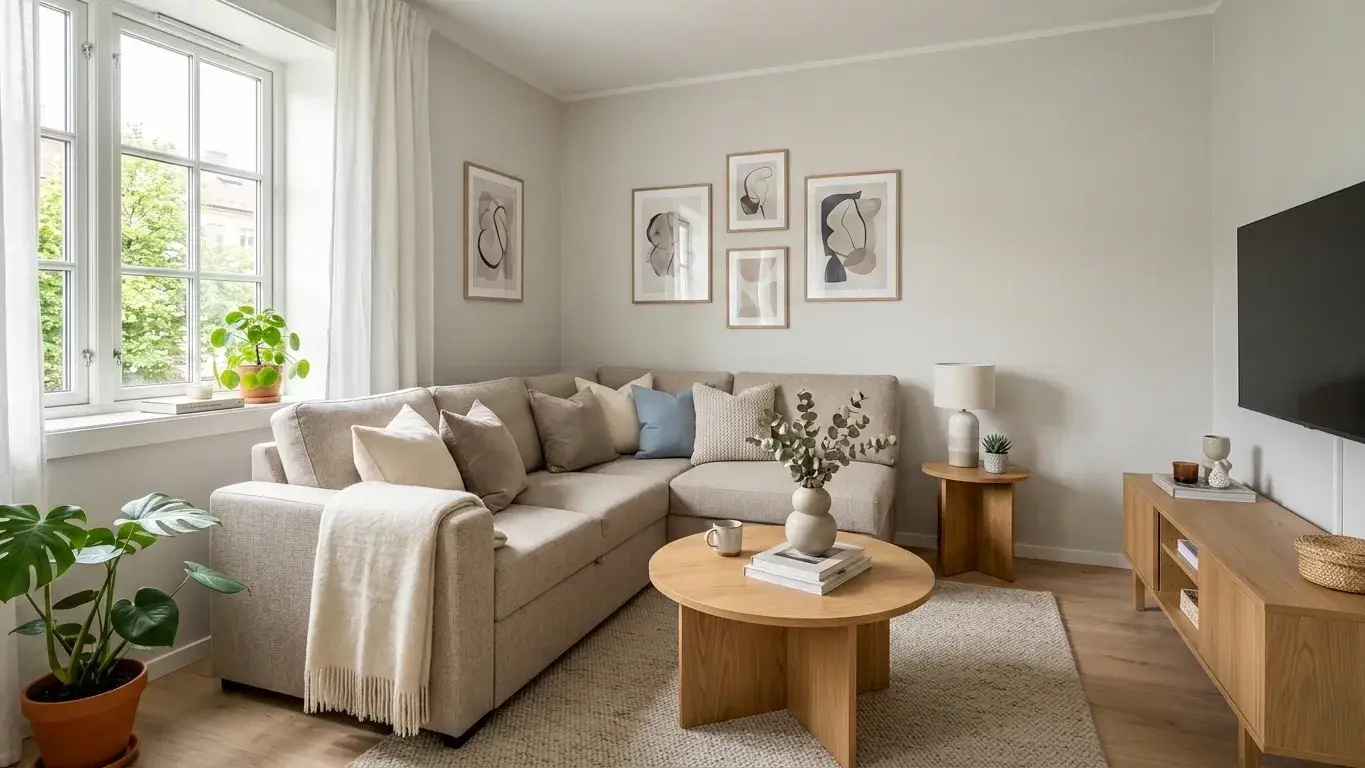
The corner of a small living room is usually the most underused space in the whole apartment. A standard sofa does not reach into it. An armchair looks stranded in it. Most people just put a plant there and call it a day.
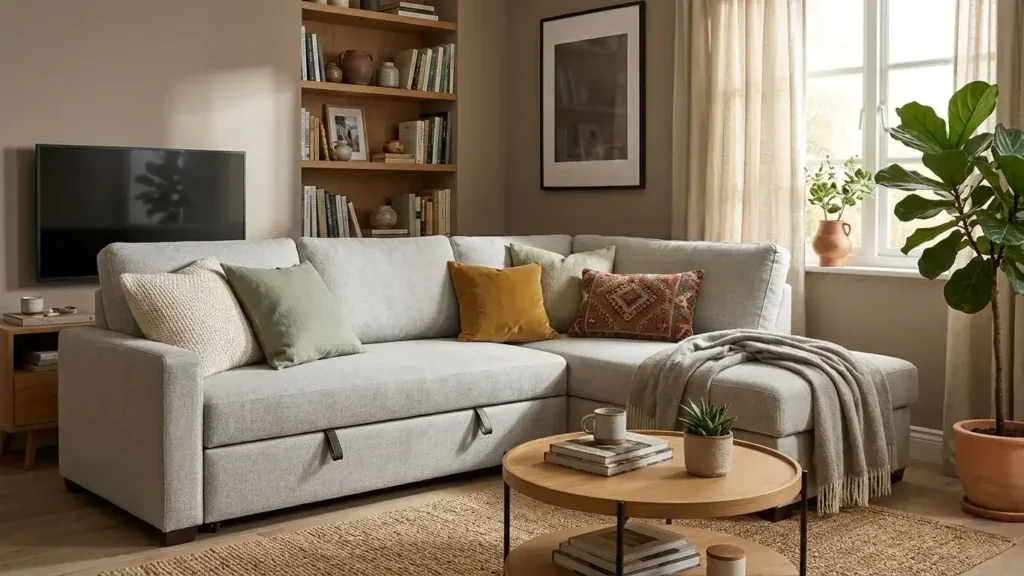
A corner sofa bed (aka: sectional sofa) fills that space properly, gives you more seating than a standard sofa, and adds a sleeping surface on top of all of that. In the right room it is genuinely one of the most practical pieces of furniture you can buy.
In the wrong room it turns an already small space into an obstacle course. So the question is not really whether corner sofa beds are good. It is whether your room is the right type of room for one.
What a corner sofa bed actually is
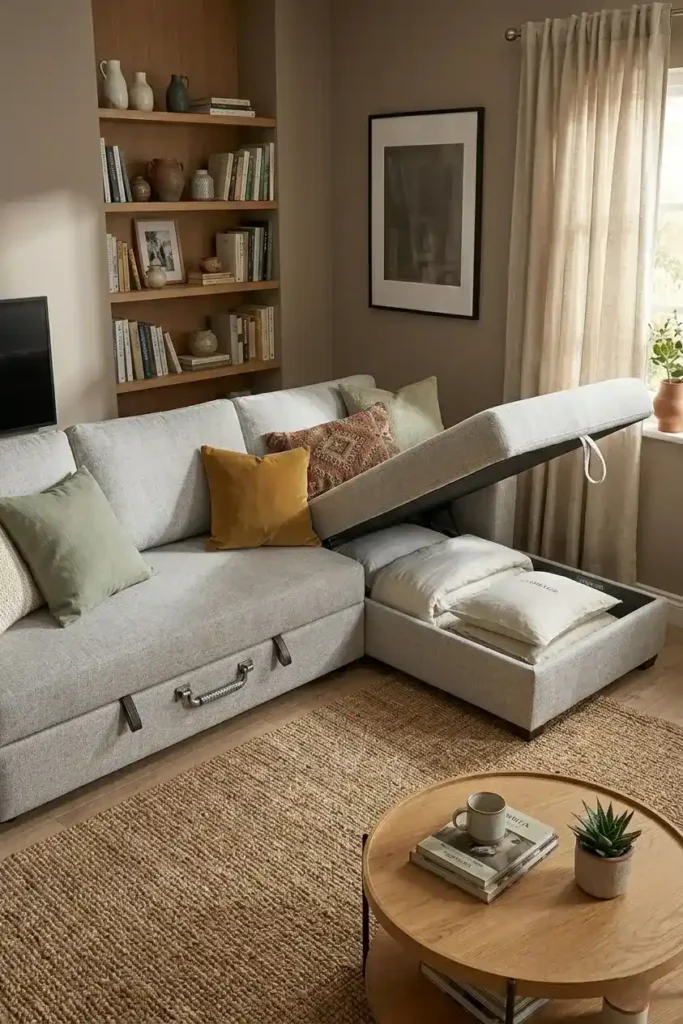
A corner sofa bed is an L-shaped sofa with a sleeping function built in. The most common type has a pull-out mattress under one of the sections, usually the main seat section. Some models use a fold-flat mechanism instead. Many include storage under the chaise for pillows and bedding, which in a small living room is worth more than it sounds.
The L-shape is what defines it. The sofa runs along two walls rather than one, which is what makes it efficient in a corner and impractical everywhere else.
If you are still comparing corner sofa beds against standard sofa beds and not sure which direction to go, our article on the real difference between a pull-out couch and other sofa bed designs covers the mechanism differences clearly.
When a corner sofa bed works well
Rectangular rooms with a clean corner
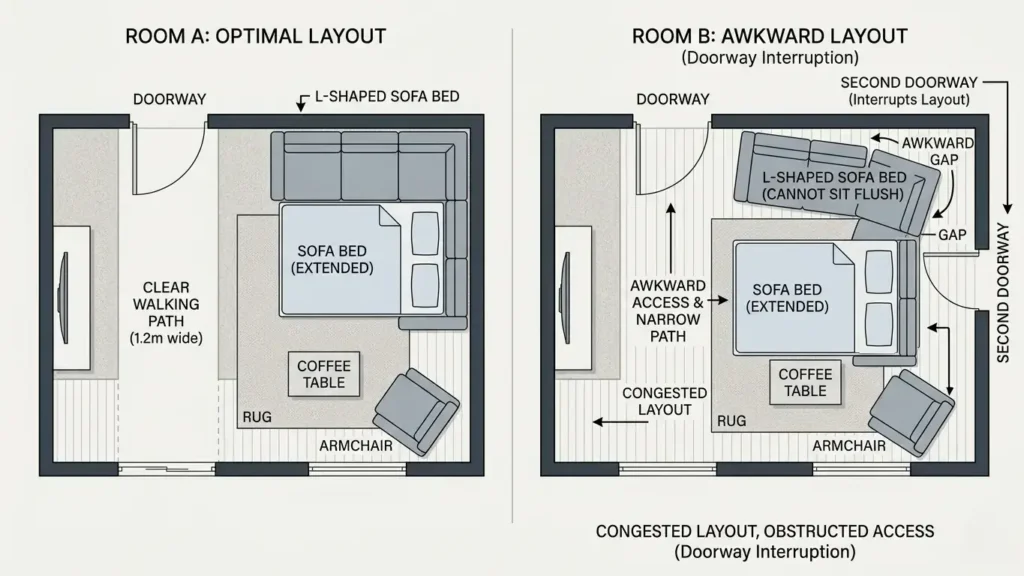
A rectangular room where two walls meet without interruption is the ideal setup. The sofa sits against both walls, the seating faces the centre of the room, and the open floor space in front stays clear. The room feels structured and deliberate rather than cluttered.
If your corner has a radiator, a door that swings into it, or a window that sits at floor level, the geometry gets complicated fast. Corner sofas need genuinely usable wall space on both sides. Measure both walls before you even look at products.
Rooms where you need more seating than a standard sofa provides
A standard two-seat sofa bed seats two people comfortably. A corner sofa seats four or five. If you regularly have people over and your living room is the social space, the extra seating makes a real difference to how the room functions day to day.
The sleeping function is almost a bonus on top of this. You are buying it for the seating first and the bed second, which also means it looks like a proper sofa most of the time rather than a piece of furniture that is obviously waiting to become a bed.
Homes where storage is always the problem
The chaise section on most corner sofa beds includes a storage compartment underneath. In a small apartment where the question of where to put the spare duvet is a genuine logistical challenge, this is a genuinely useful feature. It is one of the main reasons to choose a corner sofa bed over a standard pull-out.
Bedding goes in the chaise. The room stays tidy. When guests arrive, everything is within arm’s reach. This sounds small but after the third time of dragging bedding out of a wardrobe at midnight you will understand why it matters.
If the bedroom in your home is a separate space from the living room and you want that room to feel as considered as this one, the guide on how to style a platform bed to look like a luxury hotel bedroom is worth a read.
When a corner sofa bed does not work
It is worth being honest about this, because corner sofa beds are marketed quite aggressively as small-space solutions and the reality is more nuanced.
Very small rooms under 300 square feet
A corner sofa bed is a large piece of furniture. In a room under 300 square feet, it will take up a disproportionate amount of the floor plan and leave very little space around it. The room ends up feeling like it exists to accommodate the sofa rather than the other way around.
If your room is this size, a compact standard pull-out sofa bed or a futon is a more honest answer. Less seating, but you can actually live in the room.
Rooms where the open bed blocks an exit
This is the one that people consistently underestimate. When the bed is extended, it opens toward the centre of the room. In some layouts this is fine. In others it puts the mattress directly in the path of the kitchen, the bathroom, or the front door.
Before you order, sit on the floor where the mattress will land and look around. Can you get to everywhere you need to go? If the answer is no for any of the exits, the position does not work. Move the sofa to a different corner, or accept that this room needs a different type of sofa bed.
Rooms with awkward corners
Corners interrupted by a chimney breast, a doorway that swings into the corner, pipework on the wall, or a window that sits lower than expected are all genuine problems. The sofa needs the full length of both walls. If something interrupts either wall, the sofa either does not fit or sits oddly away from the wall, which defeats the whole point.
Left-hand or right-hand: the detail people get wrong
Every corner sofa bed comes in a left-hand or right-hand configuration. This refers to which side the chaise sits on when you are facing the sofa. Get it wrong and the chaise blocks the wrong wall, the storage faces the wrong direction, and the bed extends into a space it cannot actually reach.
To work out which you need: stand in the room facing the corner where the sofa will sit. If the chaise needs to run along the left wall, you need a right-hand sofa (the chaise is on the right when facing the sofa from the room). If the chaise runs along the right wall, you need a left-hand sofa.
This sounds confusing and it is, because the industry does not use consistent language. Some retailers describe it from the perspective of the person sitting on the sofa, others from the perspective of someone looking at it. When in doubt, look at the product image and check which wall the chaise would sit against in your room. Do not just read the description.
Getting this wrong is one of those completely avoidable mistakes that results in a 200-kilogram sofa being delivered and immediately being the wrong shape for your room. It happens more than you would think.
Sizing: what to measure before you order
- Both wall lengths. The main section and the chaise each need their respective wall length with a few inches to spare. Measure from the corner outward on each wall.
- The open bed depth. Measure from the sofa frame to where the far edge of the mattress will land when extended. Add 24 inches walking clearance beyond that.
- The room entrance. Can the sections be brought in? Most corner sofas ship in two pieces, but check the dimensions of each piece against your doorways and any hallway corners.
- Clearance to everything else. Kitchen entrance, bathroom, windows. Check all of them in bed position, not sofa position.
Corner sofa bed vs regular sofa bed: a quick comparison
| Factor | Corner sofa bed | Regular sofa bed |
| Space used | Two walls, corner footprint | Single wall |
| Seating capacity | 4 to 6 typically | 2 to 3 typically |
| Storage | Often included in chaise | Rarely included |
| Best room size | 350 sq ft and above | 300 sq ft and above |
| Room shape needed | Clean corner with two usable walls | Any room with sufficient wall length |
| Difficulty to move | High, heavy two-section piece | High but easier than corner |
| Best for | More seating, storage priority, regular guests | Simpler layouts, occasional use |
If you are ready to look at specific corner sofa bed options, our guide to the best sofa beds for small apartments includes corner sofa bed picks alongside standard pull-outs with honest notes on what suits which room.
And if you are seriously considering a sectional sleeper sofa rather than a corner sofa bed specifically, our article on whether a sectional sleeper sofa works in a studio apartment covers the layout considerations in detail.
For the best sectional sleeper sofa options specifically, our guide to the best sectional sleeper sofas for small spaces covers the top picks with dimensions included.