Choosing the right platform bed mattress matters more than most people expect. The frame holds the mattress up. But the mattress determines how well you actually sleep. Get the pairing right and the two work together seamlessly. Get it wrong and even a well-built frame fails to deliver a good night’s rest.
Platform beds suit most modern mattress types very well. However, there are real compatibility points worth knowing about, and a few specific things to avoid. This article covers both so you can make a confident choice before spending money on either.
Why platform frames suit modern mattresses so well
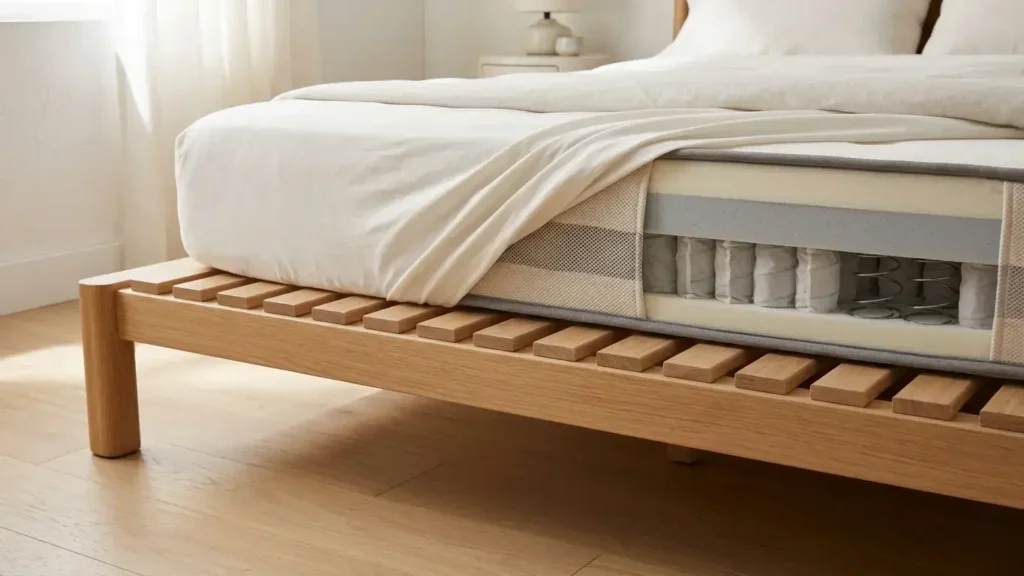
A platform bed gives your mattress a firm, flat, evenly supported surface. Modern mattresses, particularly memory foam and latex, need exactly that kind of foundation to perform as their makers intended. A solid base lets the mattress maintain its shape consistently. It also means the support layers inside the mattress do their job properly, rather than fighting against a flexing base beneath them.
Sleep quality connects directly to spinal alignment. When a mattress sags unevenly, or compresses into gaps in the support surface, it disrupts that alignment. A well-built platform frame removes that variable entirely. The mattress performs. The frame stays out of the way. That is the whole point.
Additionally, platform frames often provide better airflow underneath the mattress than a solid box spring does. Better airflow helps with temperature regulation, which affects sleep quality more than most people realise until they experience the difference.
Memory foam
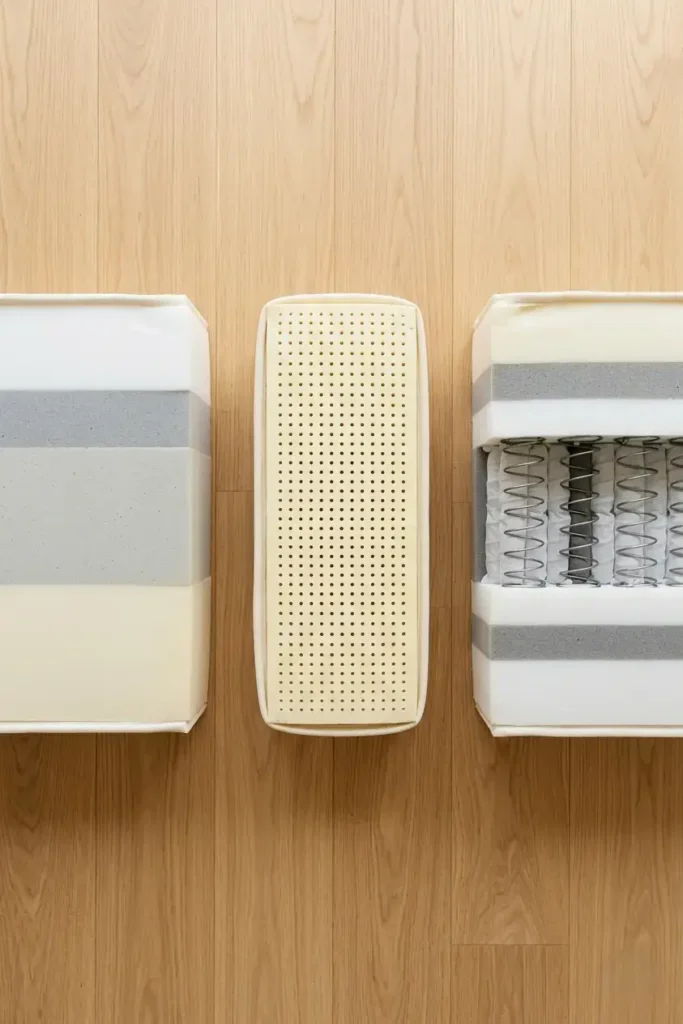
Memory foam pairs exceptionally well with a platform bed. The material responds to body heat and pressure, contouring around the sleeper and returning to its original form when they get up. To do that properly, memory foam needs a stable base that does not compress or flex. A platform frame provides exactly that.
Beyond support, the slat design on most platform frames helps with temperature. Slats let air circulate underneath the mattress. Because of this, a gel-infused memory foam mattress on a slatted platform frame runs noticeably cooler than the same mattress on a solid surface. For anyone who sleeps warm, that combination is worth seeking out specifically.
Thickness matters with memory foam. Aim for a mattress between 10 and 14 inches. Below 8 inches, the comfort layer is too thin to provide real pressure relief for most adults. Above 14 inches, the mattress height looks disproportionate on a low platform frame and makes getting in and out of bed less comfortable.
Latex
Latex mattresses rank among the most durable options on the market, and they work beautifully on platform frames. Natural latex, made from rubber tree sap, is dense, responsive, and breathable. It does not trap heat the way some foam materials do. Furthermore, it holds its support properties far longer than most alternatives, often 15 years or more with normal use.
However, latex mattresses run heavy. A queen latex mattress can weigh between 80 and 130 pounds depending on thickness and whether it uses natural or synthetic latex. That weight matters when calculating a frame’s load. Add the mattress weight to the combined weight of the people sleeping in the bed. Then check that total against the frame’s rated capacity. A frame that looks adequately rated on paper can sit closer to its limit than expected once a dense latex mattress sits on top of it.
In terms of feel, latex offers a responsive, buoyant surface. It supports rather than envelops. As a result, combination sleepers who shift position during the night often prefer it to the slower, sinking feel of memory foam.
Hybrid mattresses
Hybrid mattresses combine an innerspring coil system with comfort layers of foam or latex on top. Currently, they are among the most popular options in the US market. The coil system provides responsive support and natural airflow. The comfort layers on top add pressure relief and surface softness. Together, they deliver the strengths of both materials without the main drawbacks of either.
Hybrids work very well on platform frames. The coil system supports itself and does not rely on a box spring to function properly. The platform simply gives the coil unit a stable base to sit on. That said, slat spacing matters more with hybrids than with foam-only mattresses. Slats more than 3 inches apart let the coil layer press into the gaps over time. Look specifically for frames with slats no wider than 3 inches if you plan to use a hybrid mattress.
Quality varies considerably across the hybrid category. An entry-level hybrid and a well-constructed one from a reputable sleep brand feel like different products. The platform frame does not compensate for a poorly made mattress. Both choices should reflect how seriously you take your sleep.
What to avoid
Traditional innerspring mattresses built for box springs
Older innerspring mattress designs, particularly those built to work with a box spring, can feel harder and less comfortable on a flat platform surface. The box spring in a traditional setup adds flex and give. Without it, some innerspring mattresses feel stiffer than they should.
That said, many modern innerspring designs work fine on platforms. If you own a traditional innerspring mattress and switch to a platform frame, sleep on the combination for a few weeks before deciding whether the mattress itself needs to change.
Mattresses below 8 inches thick
A very thin mattress on a platform frame gives the sleeper very little cushioning between themselves and the slat surface. There is no spring base underneath to add give. As a result, the bed can feel hard and unforgiving, especially for side sleepers whose hips and shoulders need real pressure relief.
For everyday use on a platform bed, start at 10 inches of mattress thickness. Twelve inches works well for most sleeping styles and body types. Below 8 inches suits a guest bed used occasionally, not a primary sleeping surface used every night.
Mattresses that overhang the slat area on wide frames
On king-size platform frames, some mattresses extend slightly beyond the slat coverage on each side. Usually this causes no structural problem. However, on frames where the slat system does not extend fully to the outer edges, the mattress edges lose support. Over time, unsupported edges compress and break down faster than the centre. Before ordering, confirm that the frame’s slat system covers the full width of the mattress surface.
Slat spacing and your mattress warranty
Most mattress manufacturers state a warranty condition: the support surface must have slats no more than 3 inches apart, and some specify 2.5 inches. Using a mattress on a frame with wider gaps does not void the warranty immediately. However, it accelerates sagging and, more importantly, it will void the warranty if you ever need to make a claim.
Before placing an expensive mattress on any slatted frame, check the slat spacing against your mattress warranty requirements. If the frame’s slat spacing exceeds what the warranty allows, you have a few options. Add extra slats, place a plywood board cut to size over the existing slats, or choose a different frame. This catches many buyers off guard only when they try to make a claim. Checking it upfront costs nothing.
For more on how slat spacing affects a frame’s long-term performance, the article on what real buyers say about platform bed durability covers the patterns that show up consistently in reviews.
Mattress thickness and total bed height
| Mattress thickness | Platform height | Total bed height | Notes |
| 8 inches | 12 to 14 inches | 20 to 22 inches | Low profile, suits single sleepers |
| 10 inches | 12 to 14 inches | 22 to 24 inches | Good balance for most adults |
| 12 inches | 12 to 14 inches | 24 to 26 inches | Comfortable, suits couples |
| 14 inches | 12 to 14 inches | 26 to 28 inches | Higher end, still proportionate |
| Over 14 inches | 12 to 14 inches | 28 inches and above | Can look disproportionate on a low frame |
Total bed height affects how the room feels as much as how the bed functions. A 14-inch platform frame with a 12-inch mattress sits at 26 inches total. That is a comfortable getting-in-and-out height for most adults and a proportionate visual height for a small bedroom. Much above 28 inches and the low-profile benefit of the platform frame starts to disappear.
Sleep quality is worth investing in
A well-matched platform bed mattress and frame combination is one of the better investments you can make in a home. Sleep drives everything else. Energy, focus, mood, physical recovery. None of those work properly when sleep quality is poor.
A mattress that suits how you sleep, paired with a frame that holds it properly, returns that investment every single night. Spending well on one and cutting corners on the other undermines both. The frame is the foundation. The mattress is the sleeping surface. Both deserve the same level of thought.
The room around the bed matters too. How the light sits, how the bedding layers, how the space feels when you walk in. The article on how to style a platform bed to look like a luxury hotel bedroom covers that side of the equation.
When you are ready to look at specific platform frames with the right slat design and weight capacity for a quality mattress, the guide to the best platform beds for small bedrooms covers the top picks with the key specs listed for each one.