The honest answer is: it depends. A platform bed does not save space simply by existing. Whether it saves space comes down to which type you choose, what size you buy, and how thoughtfully you place it in the room.
Buy the right one and the room genuinely works better. Buy the wrong one and you have simply traded one large piece of furniture for another, except this one sits lower to the ground and takes up the same floor space. The storage benefit disappears, the walkways tighten, and the room ends up feeling more cramped than before.
Here is how to think through it properly before you buy.
The floor footprint does not change
A platform bed occupies the same floor area as any other bed of the same size. A queen is a queen. The footprint is roughly 60 by 80 inches regardless of whether the frame is metal, wood, or upholstered. The platform design does not shrink the bed.
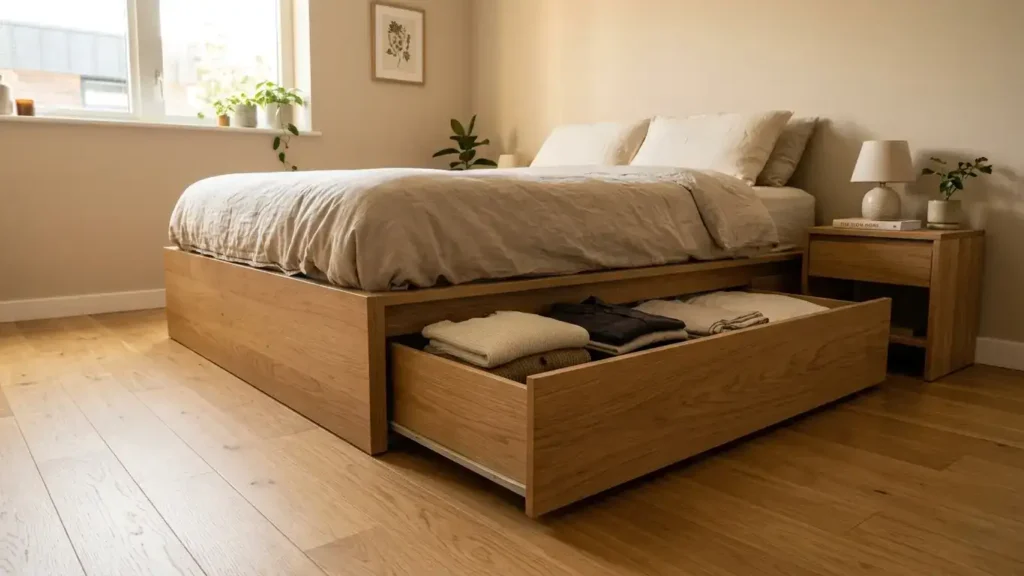
What changes is how that footprint is used. A traditional bed frame with a box spring uses the space above the floor but gives you nothing underneath. A platform bed uses the same floor area but gives you usable space below, either as open clearance for storage or as built-in drawers. The floor space consumed is identical. The value of that space is different.
So the question is not whether a platform bed saves floor space. It does not. The question is whether it uses the space it takes up more efficiently than the alternative.
Where the space saving actually comes from
Under-bed storage replaces other furniture
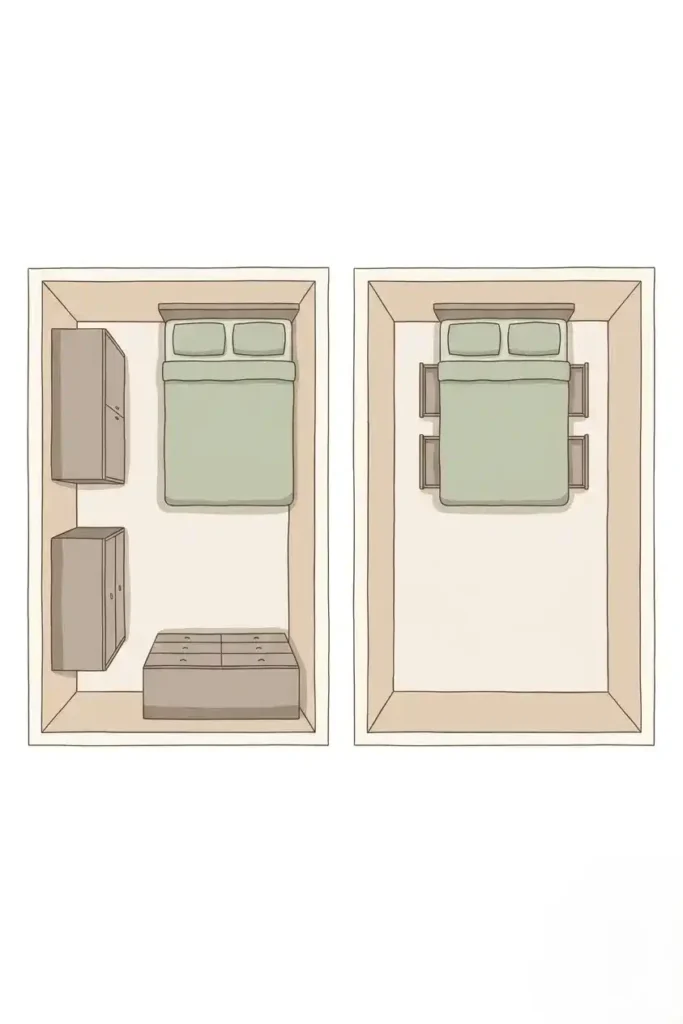
This is where a platform bed genuinely earns its footprint. If the under-bed clearance or the built-in drawers allow you to remove a chest of drawers, a storage ottoman, or a set of shelving from the room, you have gained real floor space. The bed takes up the same area it always did, but something else has been removed.
A typical four-drawer chest of drawers occupies around 3 to 4 square feet of floor space. That is roughly the width of a doorway. In a small bedroom, that is a meaningful amount of room to reclaim. If a platform bed with storage drawers replaces that chest of drawers entirely, the net result is a room with more usable floor space despite buying a bed, not less.
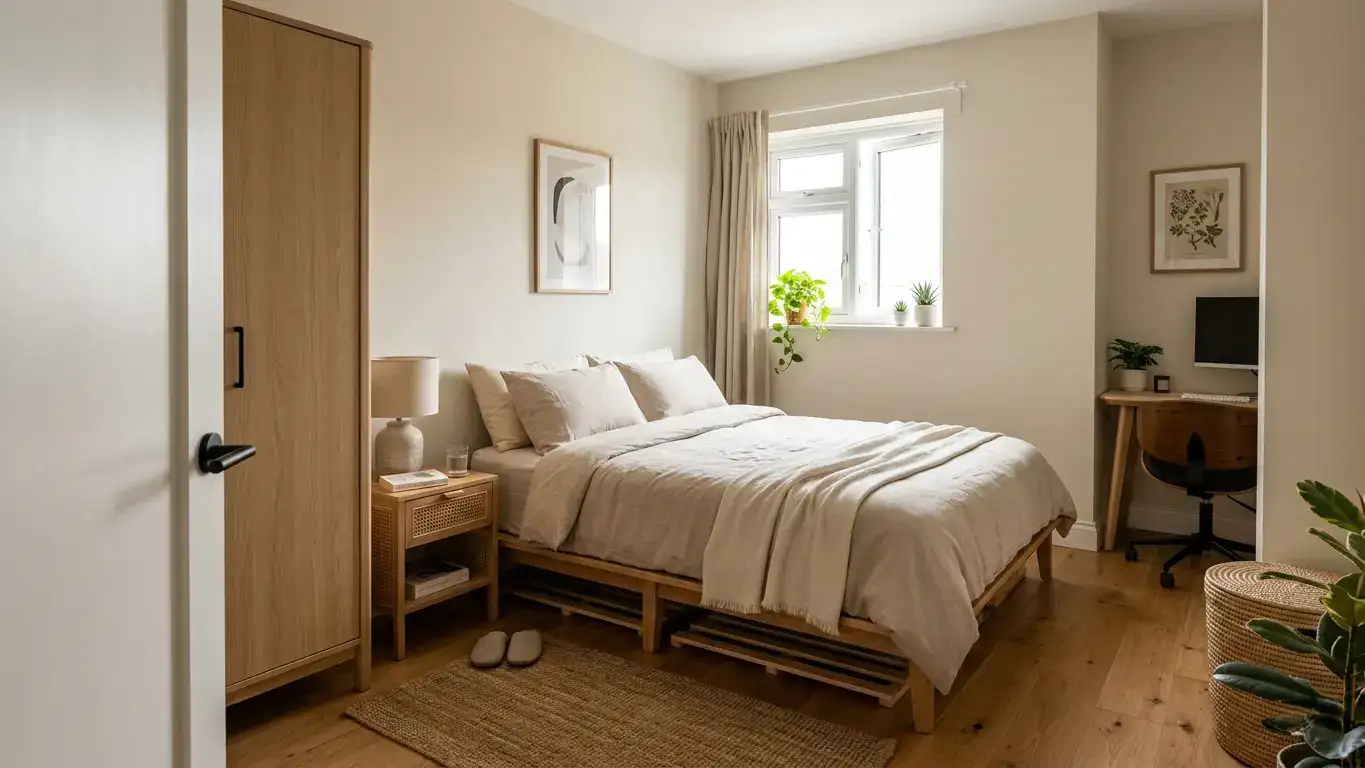
Similarly, a platform bed with generous under-bed clearance can absorb luggage, seasonal items, and spare bedding that would otherwise need a wardrobe shelf or a separate storage piece. The room stays clear. The furniture count goes down.
The lower profile opens up visual space
Beyond storage, the lower profile of a platform bed changes how the room feels, even when the floor area is unchanged. A bed that sits 12 to 14 inches off the ground leaves more visible wall space below the mattress line. The room reads as taller. There is more air in the space.
This is not a trick. It is a straightforward consequence of proportion. When the largest piece of furniture in a small room sits closer to the floor, the ceiling feels higher and the walls feel further apart. Interior designers use this principle consistently in small space projects.
When a platform bed does not save space
Buying too large for the room
A king-size platform bed in a room under 150 square feet saves nothing. It consumes the room. The walkways narrow to the point where you are turning sideways to reach the wardrobe. The drawers, if there are any, have nowhere to pull out to because a wall or another piece of furniture blocks them. The visual weight of the oversized bed dominates every corner.
Size choice is the single most important decision in a small bedroom. A queen works in most rooms of 120 square feet and above, provided the layout is sensible. A double or full size works better in tighter rooms. Going down one bed size often transforms a cramped room into a functional one, and the actual sleeping difference between a queen and a double is minimal for a single sleeper.
Choosing open clearance when drawers would serve better
Open under-bed clearance is flexible and affordable, but it has a presentation problem. Items stored loosely underneath a bed are visible from the sides of the room. For some people this is not an issue. For others, the sight of storage bins and suitcase edges poking out from under the bed makes the room feel disorganised regardless of how tidy it actually is.
If the appearance of the room matters to you, and for most people in a space they live in every day it does, drawers are worth the additional cost. Everything is contained. The room reads as clean. Guests see a bed, not what is stored underneath it.
Drawers that cannot open properly
This is an easy mistake to make and an expensive one to discover after delivery. A platform bed with side-opening drawers needs clear floor space on the drawer side to pull them out fully. If the bed is positioned against a wall on the drawer side, or if another piece of furniture sits too close, the drawers become unusable.
Before ordering, decide exactly where the bed will sit in the room. Identify which side the drawers open from. Confirm there is at least 24 to 30 inches of clear floor space on that side for the drawer to extend into. If the room does not allow for this, either choose a bed with end-opening drawers, choose a different position for the bed, or choose open clearance instead of drawers.
The bedroom as a system
Space saving in a small bedroom is not about one piece of furniture. It is about how all the pieces work together. A platform bed is one part of that system. On its own it does not transform a small room. Combined with thoughtful decisions about what else belongs in the room, and what can be removed, it makes a real difference.
The most effective approach is to start with the bed, calculate what storage it provides, and then work out what other furniture the room still needs. If the platform bed with drawers handles clothing and seasonal items, perhaps the chest of drawers can go. If the under-bed clearance handles luggage and spare bedding, perhaps the wardrobe can be smaller.
Every piece of furniture you remove from a small bedroom is a win. The platform bed’s job is to make some of those removals possible.
Once the practical decisions are made, the article on how to make your bedroom feel like a home rather than a hotel is worth reading for the styling side of the same question.
Having a bed built to fit
One option that suits a permanent room well is commissioning a carpenter to build a platform bed to your exact specifications. This is not as unusual or as expensive as it sounds for a fitted solution. A local carpenter or furniture maker can build a platform base with drawers that fit the exact dimensions of your room, with the drawer placement optimised for the specific wall positions and walkway widths you have.
The advantage is precision. Rather than buying a standard bed and arranging the room around it, you design the storage around the room first. The result is a bed that genuinely fits the space rather than one that approximately fits it. For a bedroom you plan to stay in for several years, this is worth exploring before defaulting to an off-the-shelf option.
A quick guide to bed size and room size
| Room size | Recommended max bed size | Minimum clearance on each side | Notes |
| Under 100 sq ft | Twin or Full | 18 inches | Keep furniture count minimal |
| 100 to 130 sq ft | Full or Queen | 24 inches | Queen works if layout allows |
| 130 to 180 sq ft | Queen | 24 to 30 inches | Room for a nightstand and desk |
| 180 sq ft and above | Queen or King | 30 inches | King becomes viable with good layout |
Clearance figures refer to the walkable space on each open side of the bed. The wall side does not need clearance. The side you get in and out from needs at least 24 inches. The drawer side needs 24 to 30 inches for the drawer to open fully.
What to check before you buy
Measure the room before looking at products. Note the wall lengths, the door swing, and where the window sits. Decide where the bed will go before choosing its size.
Confirm the drawer opening direction and ensure that side has enough clearance. Check the under-bed clearance height if you are relying on open storage. Verify that the frame includes a central support leg, particularly on larger sizes, so the slats do not bow over time.
Finally, think about what the platform bed allows you to remove from the room. That calculation is where the real space saving lives. The bed itself takes up floor space. What it replaces determines whether the room ends up with more or less of it.
When you are ready to look at specific options sized and configured for small rooms, the guide to the best platform beds for small bedrooms covers the top picks with dimensions and storage configurations for each one.