
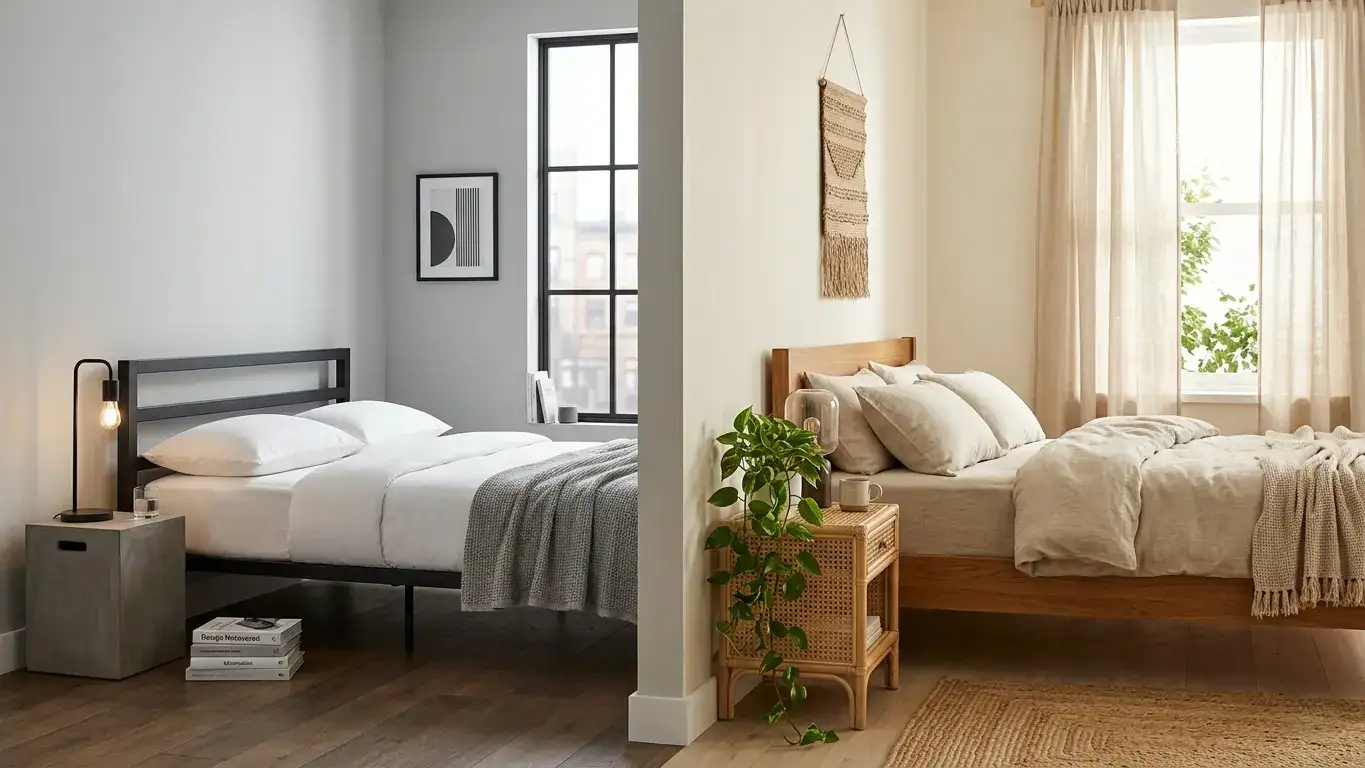
Metal and wood platform beds are both solid choices. But they are not interchangeable, and the right one for your room depends on factors beyond the price tag.
The price difference is real. A well-built metal frame typically costs less than a comparable wood frame. However, stopping the comparison there misses most of what actually matters. The material affects how the bed looks, how it sounds over time, how easy it is to move, and how long it holds up under daily use.
Here is an honest breakdown of both, so you can decide with your eyes open rather than just going with whichever listing shows up first.
Metal platform beds
What they do well
Metal frames are lighter than wood, which makes them significantly easier to move, reassemble, and transport. If you move apartments regularly, or if you want the option to reconfigure your room without a two-person job, a metal frame handles that well. Some models fold flat, which is useful for storage between uses or for anyone who needs a temporary sleeping solution that can be packed away.
The other clear advantage is price. A well-reviewed metal platform frame with good under-bed clearance and a solid slat system starts at around $70 to $110. At that price point, you are getting a functional, practical bed frame that does not ask the room to accommodate it. It simply sits there and does its job.
Metal frames also tend to have the highest under-bed clearance of any platform bed type. Frames like the Zinus Van at 16 inches give you genuinely useful storage space underneath. Because the frame is structurally simpler, the legs can be made taller without adding significant weight or cost.
What to watch for
The most common complaint about metal platform beds is noise. Over time, the joints where metal meets metal can develop a squeak, particularly if the frame is used heavily or if the bolts are not checked periodically. This is not inevitable, but it is common enough to be worth mentioning. Frames with rubber or plastic padding at the contact points tend to stay quieter for longer.
Rust is also worth considering, especially in humid climates or in rooms with poor ventilation. Most modern metal frames use powder-coated steel, which resists rust reasonably well. However, the joints and any scratched areas of the coating are the places to watch over time.
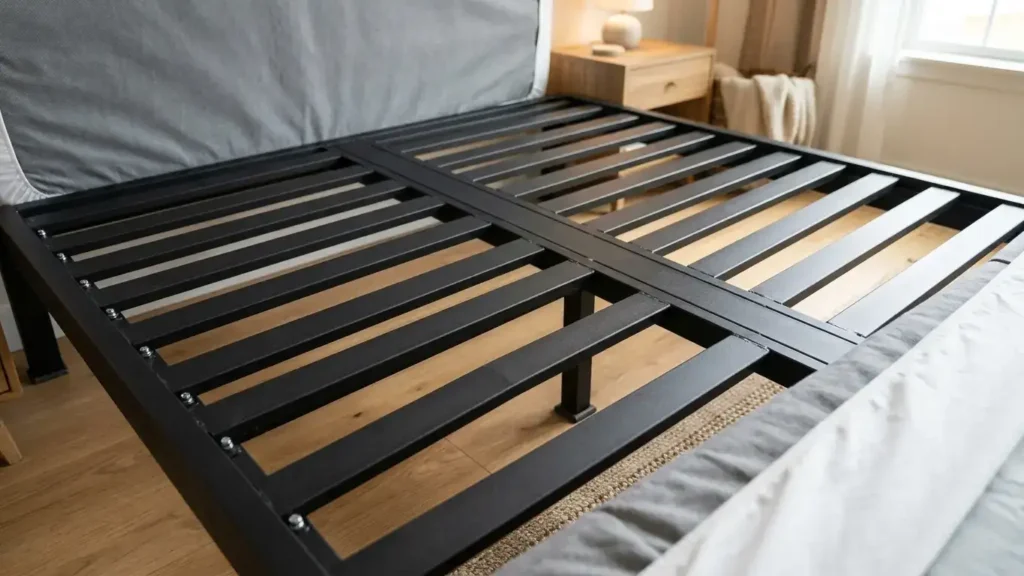
The other issue, and this one matters more than it sounds, is centre support. Some entry-level metal frames are essentially an outer rectangle with slats spanning across and nothing supporting the middle of those slats from below. That is not adequate for most adults. A frame without central leg support will flex over time and the slats will eventually bow. Before buying any metal frame, check specifically for a central support bar with at least one leg underneath it. If the product images do not show this clearly, look at the reviewer photos. Buyers who have been sleeping on the frame for a year tend to take detailed photos of how it has held up.
Reading those review patterns before you buy is exactly the kind of research that pays off. The article on what real buyers say about platform bed durability goes through the most common issues across the top selling frames.
Wood platform beds
What they do well
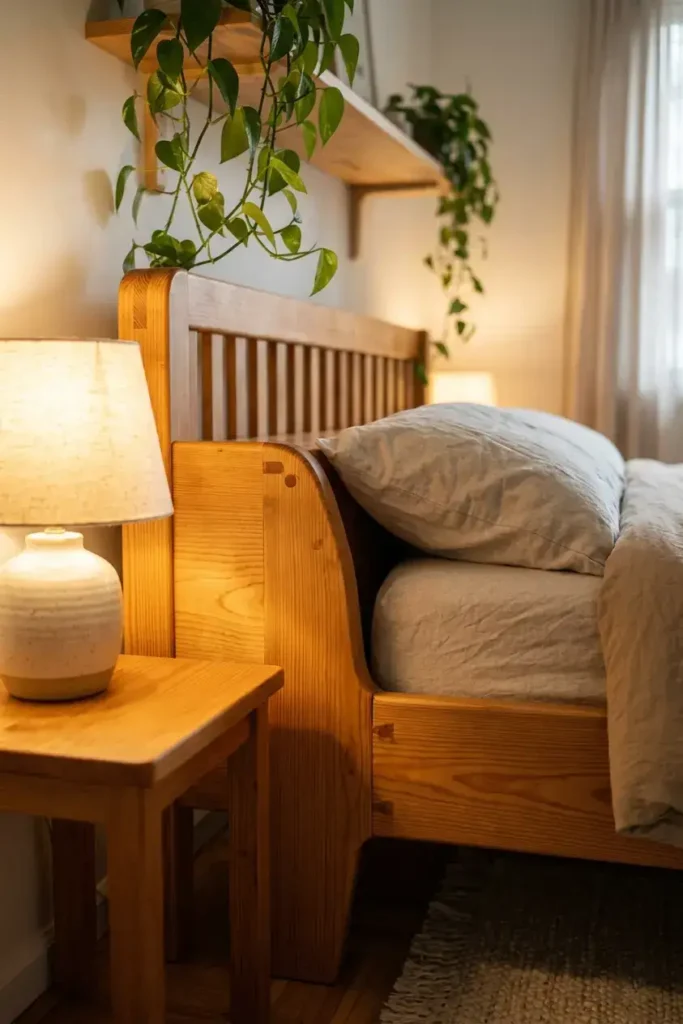
A solid wood platform bed looks like furniture. That distinction matters more than it might seem. When you walk into a room with a well-made wood frame, the bed reads as a considered piece of the space rather than something functional that happens to be there. The warmth of natural wood grain, the weight of the structure, and the quietness of the construction all contribute to a room that feels settled and intentional.
Wood is also naturally quieter than metal under movement. There are no metal-on-metal joints to develop a squeak. Solid wood frames, in particular, tend to stay noise-free for years. The structure moves slightly as wood does with temperature and humidity changes, but that movement is gradual and silent rather than the sudden creak you get from a metal joint that has worked loose.
From a structural standpoint, solid wood adds genuine strength. The frame itself is heavy, which contributes to stability. A well-built solid pine or oak platform bed handles weight confidently and does not require the same level of periodic maintenance that a metal frame does.
Wood also ages better visually. A metal frame looks the same or slightly worse as years pass. A solid wood frame, especially in a natural finish, develops a patina that most people find attractive rather than off-putting.
The material question you need to ask
Not all wood frames are equal, and this is where buyers get caught out. The term wood covers a wide range of things. Solid pine is a genuine softwood that machines well, takes stain beautifully, and is durable for everyday use. Solid oak is denser, harder, and more expensive but also more resistant to wear and denting. Engineered wood, which includes MDF and particleboard, is cheaper but significantly less durable and considerably heavier for its strength.
Some frames advertise a wood finish but are primarily engineered wood with a veneer. These look fine in product photos and initially feel solid. Over time, however, the particleboard does not hold screws as well as solid wood, and the joints can loosen more quickly under daily use. If the product description says solid wood, look at the one-star reviews and check whether buyers mention splitting, warping, or joint failures after six to twelve months. That pattern, when it appears consistently, usually means the frame is not the solid wood it claims to be.
The right approach is straightforward. If budget allows, go solid wood. If the frame you are considering is ambiguous about its materials, treat it as engineered wood until proven otherwise.
The honest comparison
| Factor | Metal frame | Wood frame |
| Price range | $70 to $160 for most options | $125 to $280 for solid wood |
| Weight | Light, easy to move | Heavy, harder to reposition |
| Noise over time | Can develop squeaks at joints | Generally quiet, stays quiet |
| Aesthetics | Minimal, modern, industrial | Warm, homely, considered |
| Durability | Good if centre support is solid | Very good with solid wood |
| Under-bed clearance | Often higher, 14 to 16 inches typical | Moderate, 10 to 14 inches typical |
| Rust or wear | Possible at joints over time | Can warp if moisture is a problem |
| Best for | Practical use, flexibility, storage focus | Permanent rooms, aesthetics matter |
Which one is right for your room
If the bedroom is a permanent space and the way it looks matters to you, wood is almost certainly the better long-term choice. The additional cost is justified by better aesthetics, quieter daily use, and a frame that holds its appearance over years rather than months.
If you move regularly, if the room is a guest bedroom used occasionally, or if you need a functional solution at a lower price point, a well-chosen metal frame delivers excellent value. The key word is well-chosen. An entry-level metal frame with no central support will not hold up. A mid-range metal frame with solid slats, rubber-padded joints, and a central support leg will serve you reliably for years.
Both materials fail at the entry-level if you go too low on price. A $70 metal frame with thin slats and no centre support is a poor investment at any budget. Similarly, a wood frame made from low-grade engineered wood with weak joints will not outlast a solid metal frame, regardless of how it looks in the listing photos. The material matters less than the build quality within that material.
One practical note worth making: if back support is a concern, the frame matters less than the mattress and slat spacing. However, a frame with closely spaced slats, ideally no more than 3 inches apart, and a solid central support does make a real difference to how the mattress performs over time. Widely spaced slats cause the mattress to sag into the gaps, which is bad for the mattress and bad for your sleep.
If the room you are building is personal rather than minimal, the article on how to make your bedroom feel like a home rather than a hotel covers the styling side of that decision honestly.
When you are ready to compare specific options across both materials, the guide to the best platform beds for small bedrooms covers the top picks with honest notes on build quality and what to expect at each price point.
And if you are considering an upholstered frame as a third option alongside metal and wood, the article on whether upholstered platform beds are worth it in small rooms covers that decision specifically.