If you have spent any time looking at beds online, you have almost certainly seen the term platform bed without anyone ever properly explaining what it means. It gets used to describe everything from a $70 metal frame to a $900 upholstered statement piece, which does not exactly help when you are trying to figure out whether one belongs in your room.
This is the article I wish had existed when I started looking. No filler, no upselling. Just a clear explanation of what a platform bed actually is, how it is different from what most people grew up with, and why it tends to work particularly well when space is the constraint.
What makes a platform bed a platform bed
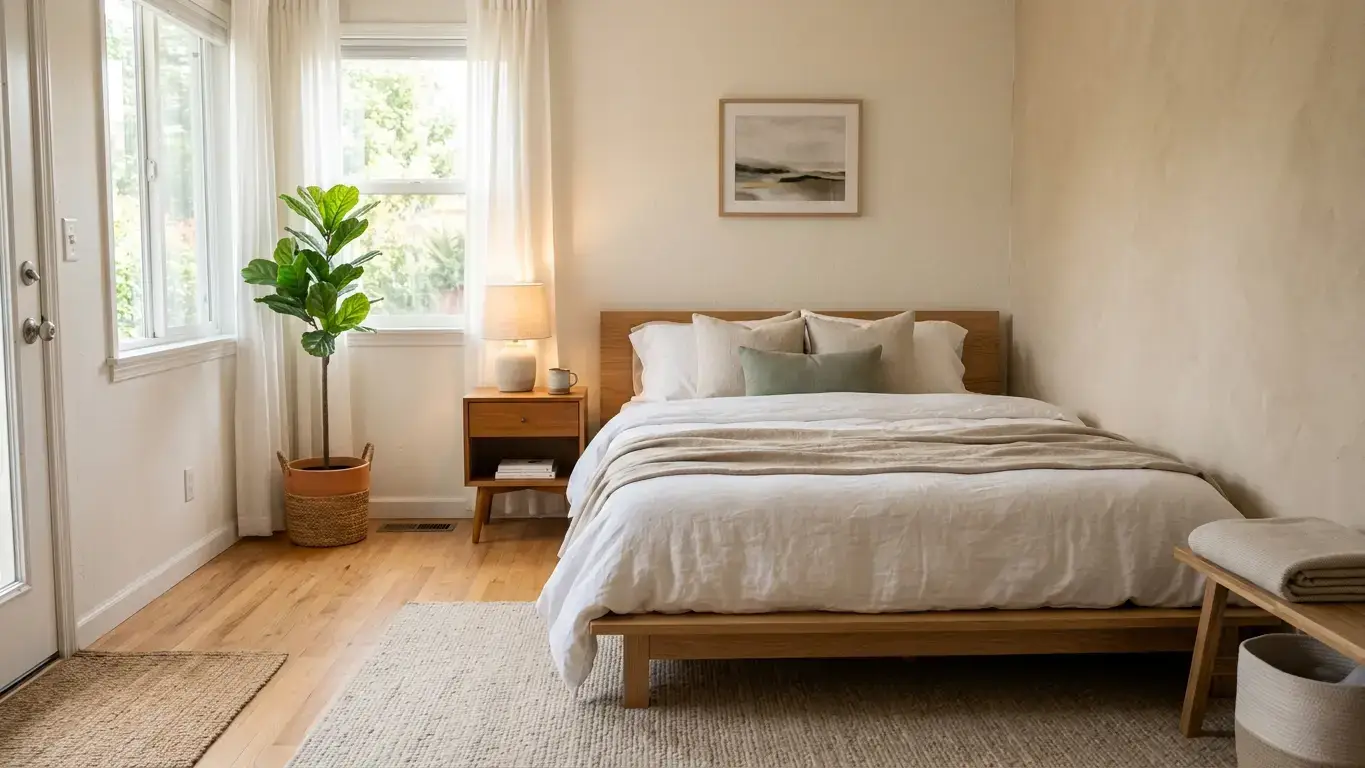
A platform bed is a bed frame with a built-in surface that supports your mattress directly, without needing a box spring underneath. That built-in surface is usually a grid of wooden slats or a solid panel. And it sits low enough to the ground that the overall profile of the bed, frame plus mattress, stays closer to the floor than a traditional setup.
That is really the whole definition. No box spring. Mattress sits on the frame itself. Lower profile as a result.
Everything else, the material, the style, the storage clearance underneath, whether there is a headboard, how heavy it is, how much it costs, varies enormously from one product to the next. But if the frame supports the mattress directly without a box spring, it is a platform bed.
What most people grew up with instead
The traditional alternative is a bed frame designed to hold a box spring, which then holds the mattress. A box spring is a wooden or metal base with springs or a rigid interior, wrapped in fabric, that sits between the mattress and the frame. It adds height, it adds cost, and it adds a second large piece of furniture to the bedroom.
For a long time this was the standard setup because older mattress designs, particularly innerspring mattresses from decades ago, genuinely benefited from the additional give that a box spring provided. Modern mattresses, including memory foam, latex, and most contemporary hybrid designs, do not need that additional layer. They work better on a firm, flat surface, which is exactly what a platform bed provides.
The box spring stuck around for years mainly out of habit. A platform bed removes it entirely, which means one less thing to buy, one less thing to move, and a noticeably lower bed height.
Why the lower height matters in a small room
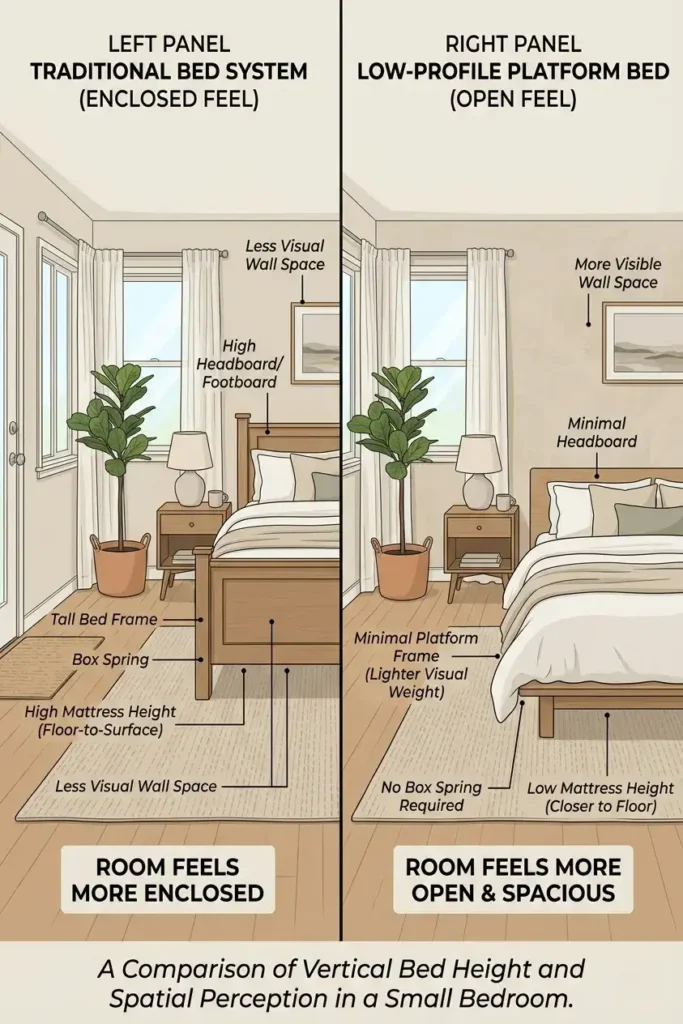
This is the part that surprises people who have not thought about it. A lower bed makes a small room feel bigger, and the reason is simple geometry. When the tallest piece of furniture in the room sits closer to the floor, your eye has more uninterrupted wall space to travel up. The room reads as taller. It breathes more.
A traditional frame with a box spring sits roughly 25 to 30 inches off the floor before you factor in the mattress. A platform bed typically sits 12 to 16 inches off the floor, sometimes lower. Add a 10-inch mattress and you are sleeping at a total height of around 22 to 26 inches, versus 35 to 40 inches on a traditional setup. That difference is visible the moment you walk into the room.
For anyone in a studio apartment, a small bedroom, or any room where the furniture feels like it competes with the space, that lower profile is not a minor aesthetic detail. It is one of the more effective tricks for making a small room feel less crowded.
The different types you will come across
Platform beds are sold in enough different forms that it helps to know the main categories before you start comparing products.
Metal platform frames
The most affordable option and the most minimal in terms of appearance. A grid of steel or alloy slats on a metal base. No headboard unless you add one separately. Usually the lightest option and the easiest to move around. The under-bed clearance on metal frames tends to be generous, often 12 to 16 inches, which is useful for storage in a small room. If the frame looks purely functional to you, that is because it is. Whether that bothers you depends on the room.
Wood platform frames
Warmer in appearance than metal and generally more substantial in feel. Solid wood frames are quieter over time and tend to look more like intended furniture rather than a product from a listing photo. Engineered wood or MDF frames sit at a lower price point but are heavier and less durable than solid wood over the long term. Worth checking what you are actually buying before assuming wood means solid wood throughout.
For a deeper comparison of how the two materials hold up over time, the article on metal versus wood platform bed frames covers it in full.
Upholstered platform frames
A platform frame with a fabric-covered headboard and sometimes a fabric-covered base. The upholstered headboard changes the feel of the room considerably, making the bed read more like a designed piece of furniture. The trade-off is maintenance. Fabric shows wear, picks up dust, and is harder to clean than a painted or stained wood or metal surface. In a small room where the bed is the dominant piece of furniture, an upholstered headboard can anchor the whole space effectively. In a room with pets or children, think twice.
Platform beds with storage
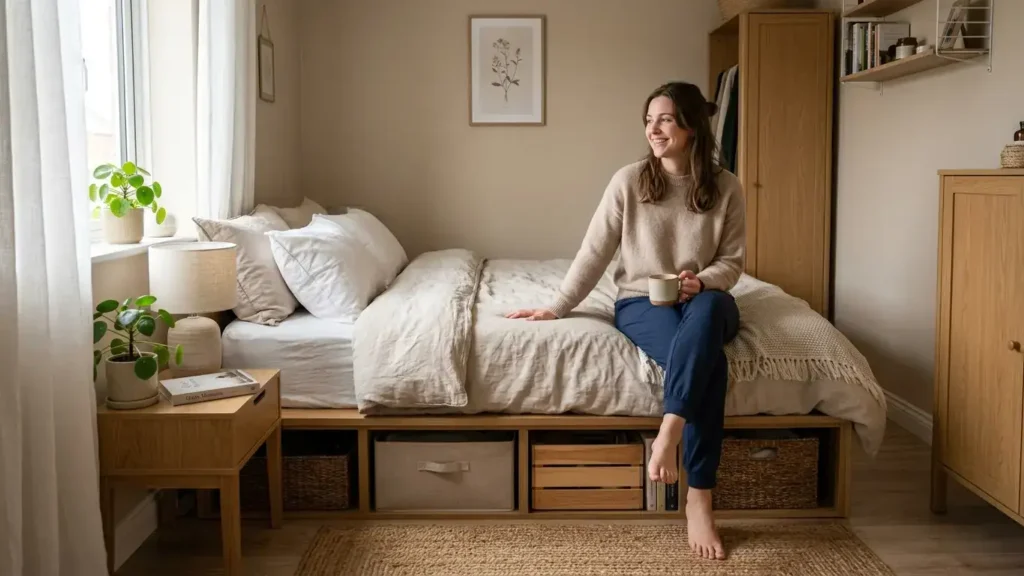
Some platform frames include storage drawers built into the base, either on the sides or at the foot of the bed. Others are simply raised enough to use the under-bed clearance for storage bins, suitcases, or seasonal items. The distinction matters because built-in drawers add height and cost, whereas a frame with generous clearance gives you the same storage flexibility without the added complexity. For a small bedroom, the under-bed clearance question is worth asking about specifically.
What you actually need to check before buying
The number that matters most is the open bed dimensions, not the frame dimensions. Most listings show you the length and width of the frame, which tells you how much floor space the bed will occupy. What they do not always make obvious is the total height, including mattress, and the under-bed clearance.
Total height matters because a platform bed that is genuinely low to the ground needs a mattress of the right thickness to sit at a comfortable height for getting in and out. Most platform frames work best with mattresses between 8 and 12 inches thick. A very thin mattress on a low frame can feel too close to the floor for most adults. A very thick mattress on a low frame can look disproportionate and negate the low-profile effect entirely.
Under-bed clearance matters because in a small room this is often the only practical storage space you have. Clearance figures vary from as little as 6 inches on the lowest profile frames to 16 inches on taller metal designs. Six inches fits not much beyond a very flat under-bed bag. Twelve inches fits storage bins and most suitcases on their side. Sixteen inches fits a surprising amount.
If you want specific measurements and size guidance for your room, the article on how much storage a platform bed actually gives you goes through the clearance numbers in practical detail.
The box spring question, settled
You do not need a box spring with a platform bed. In fact, adding one defeats most of the point. A box spring raises the total height of the bed significantly and, on most platform frames, is not designed to be used at all. Some frame warranties specify that using a box spring voids the coverage.
If you already own a box spring and are trying to figure out whether to keep it, the honest answer is no. Store it, sell it, or dispose of it. A good platform frame supports your mattress directly and does it better than the box spring was doing.
Is it right for your room
A platform bed suits a small room well when the priority is keeping the space feeling open, when storage is useful but not the dominant concern, and when you want furniture that looks intentional rather than temporary.
It is less ideal when the room has very specific requirements, a sleeper who needs a particularly high bed for mobility reasons, for instance, or a room where the aesthetic is specifically traditional and a low modern frame would look out of place.
For most people in most small bedrooms, the platform bed is the right call. Lower profile, no box spring to buy or store, under-bed storage you can actually use. It is a genuinely good fit for compact living, which is the whole reason it has become the default choice for small apartments rather than the traditional alternative.
When you are ready to see specific options across metal, wood, and upholstered styles, our guide to the best platform beds for small bedrooms covers the top picks with honest notes on what suits which room and which budget.
Once you have chosen the frame, the guide on how to style a platform bed to look like a luxury hotel bedroom covers exactly what to put on it and around it to make the room feel genuinely considered.